

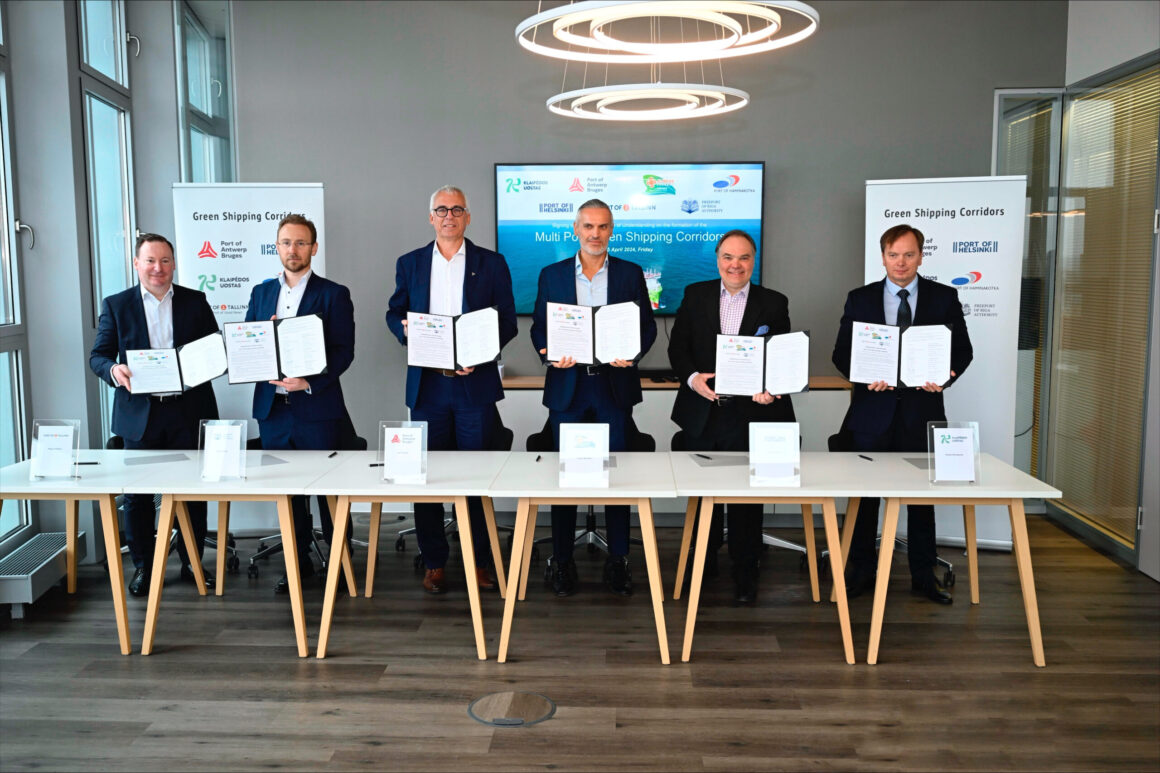
Klaipeda Port, along with five prominent European ports including the Port of Antwerp Bruges, Port of Tallinn, Port of Helsinki, Freeport of Riga, and X-Press Feeders, the world’s largest independent common carrier, have inked a memorandum of understanding (MOU). This pivotal agreement signals a collective endeavor to expedite the establishment of green shipping corridors and advance the wider decarbonization of the maritime sector across Scandinavia and the Baltic Sea. Through this MOU, X-Press Feeders and the participating ports commit to pooling resources and expertise to foster sustainable practices in maritime operations.
Key provisions of the MOU include collaborative efforts to enhance infrastructure for alternative fuels provision and bunkering, with a focus on green methanol, as well as the promotion of supply chains for low or zero-emission fuels. Additionally, the agreement aims to bolster training programs for port workers and seafarers on the handling of alternative fuels and leverage digital platforms for optimized port call management. Regular meetings are slated to ensure ongoing progress and discussion on actions to further advance green shipping corridors, emphasizing the collective dedication to broader decarbonization initiatives within the maritime industry.
The collaboration’s initial focus will be on launching two environmentally sustainable shipping routes: the Green Baltic X-PRESS (GBX) and the Green Finland X-PRESS (GFX). These scheduled feeder routes, set to commence in Q3 2024, represent a significant stride towards eco-friendly shipping services in Europe, powered by green methanol. This move is noteworthy as it marks the inauguration of Europe’s first scheduled feeder routes fueled by green methanol, known for emitting at least 60% less greenhouse gas emissions compared to conventional marine fuel. X-Press Feeders’ green methanol, sourced from fuel supplier OCI Global, undergoes production through the decomposition of organic matter and is certified by the International Sustainability and Carbon Certification (ISCC) Association, highlighting its sustainable credentials in line with global standards.