

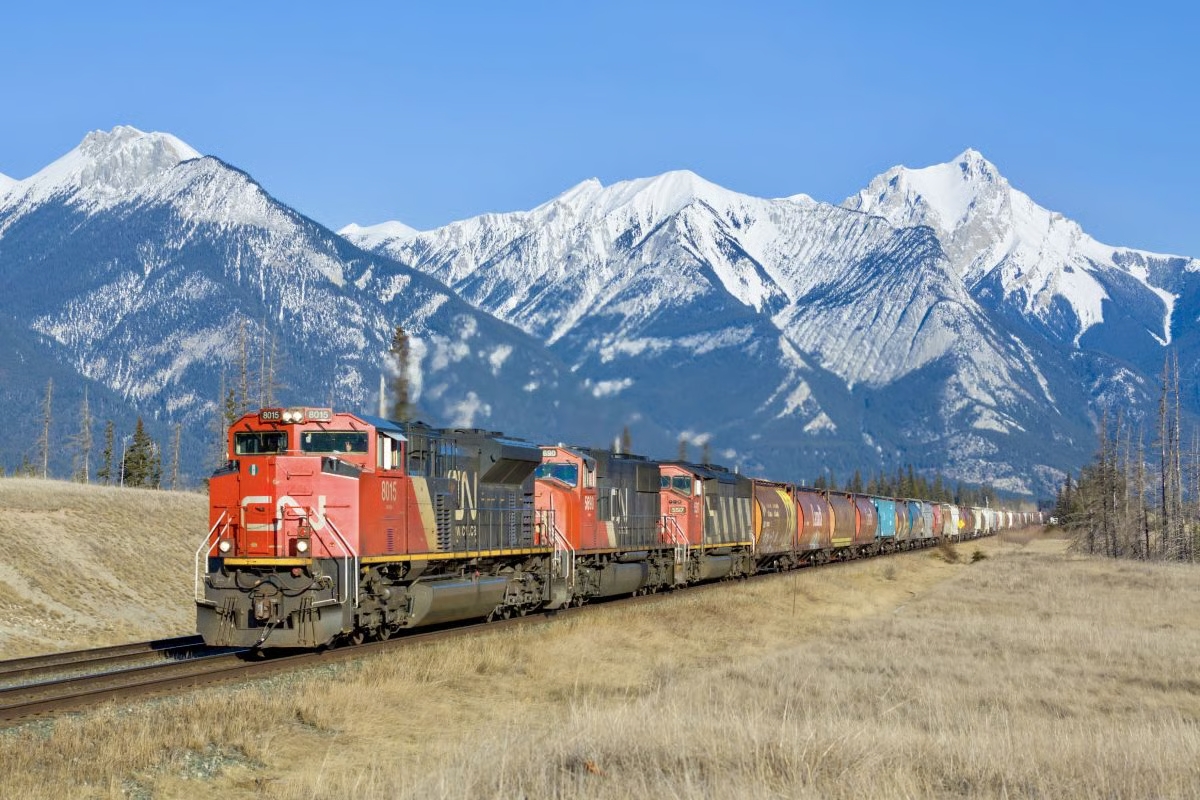
Rail freight in North America continues to play a central role in supply chains, but the operating environment is becoming more demanding. According to the Railway Association of Canada (RAC) Rail Trends 2025 report, freight traffic measured in revenue tonne-kilometres grew year on year, yet structural pressures are increasingly visible.
Fuel remains one of the key cost drivers. In 2024, RAC member railways consumed approximately 2.1 billion litres of fuel, a year-on-year increase of 3.6%. While average diesel prices eased slightly compared to the peak years of 2022–2023, fuel costs remained the third highest on record, limiting the financial relief for freight operators.
Labour productivity improvements have also slowed. Freight rail productivity increased by just 1.4% in 2024, reaching around 10,063 revenue tonne-miles per employee. Over a ten-year horizon, this represents only a modest net improvement, reflecting tighter labour regulations, longer rest requirements and the need for additional crews to maintain service levels.
Intermodal freight remains one of the strongest segments, accounting for a growing share of total rail carloads. However, intermodal volumes were affected by external disruptions, including port congestion and labour disputes, underlining the sensitivity of rail freight performance to wider supply-chain stability.
Despite these challenges, rail freight continues to outperform road transport on efficiency and emissions. Fuel efficiency reached a new record in 2024, with freight railways moving more cargo per litre of fuel than ever before. This reinforces rail’s strategic role in decarbonising freight transport, even as operators face mounting cost and capacity pressures.
Looking ahead, the RAC data suggest that sustaining rail freight competitiveness will depend less on volume growth alone and more on targeted infrastructure investment, digitalisation and regulatory alignment that supports productivity gains rather than constraining them.
While the study focuses on North America, many of the identified trends mirror developments currently seen in Europe. European rail freight operators are facing similar pressures, including rising infrastructure and energy costs, capacity constraints, and the challenge of maintaining service reliability amid large-scale network renewals. Although regulatory frameworks and market structures differ, the North American experience outlined in the RAC study closely reflects issues increasingly discussed across key European rail freight corridors.