

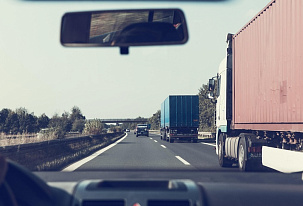
Starting in 2026, road haulers in several European countries will face increased road tolls, an expanded toll network, and a transition to new toll collection models. These changes will affect Austria, Belgium, the Czech Republic, France, the Netherlands, Romania, and Poland, requiring transport companies to review tariffs, routes, and contract profitability. In many countries, CO₂ emissions will be a key factor in toll calculations, reflecting the pan-European commitment to decarbonizing transport.
In Austria, new rates for trucks will be introduced starting January 1, 2026, taking into account the number of axles, CO₂ emissions, and noise levels. Authorities claim the reform is aimed at encouraging zero-emissions transport and a shift to rail freight. In the Czech Republic, tariffs will increase and the toll road network will expand starting the same date, with the greatest impact on heavy four- and five-axle road trains. Belgium will update its toll system from January 1 to July 1, 2026, while in France, motorway tolls will increase by an average of 0.87% from February 1, 2026, representing one of the most modest increases in recent years.
The most systemic changes are planned for the Netherlands and Eastern Europe. From July 1, 2026, the Netherlands will abandon the Eurovignette and introduce a toll based on actual kilometers traveled, taking into account vehicle weight and CO₂ emissions class, covering almost all motorways and key roads. Romania will replace the vignette for vehicles over 3.5 tonnes with the TollRo electronic “pay as you go” system during the same period. In Poland, rates have already been indexed since January 2026, and from February, tolls in the e-TOLL system will increase by 40-42% for trucks and buses, representing one of the most significant increases in the region.