

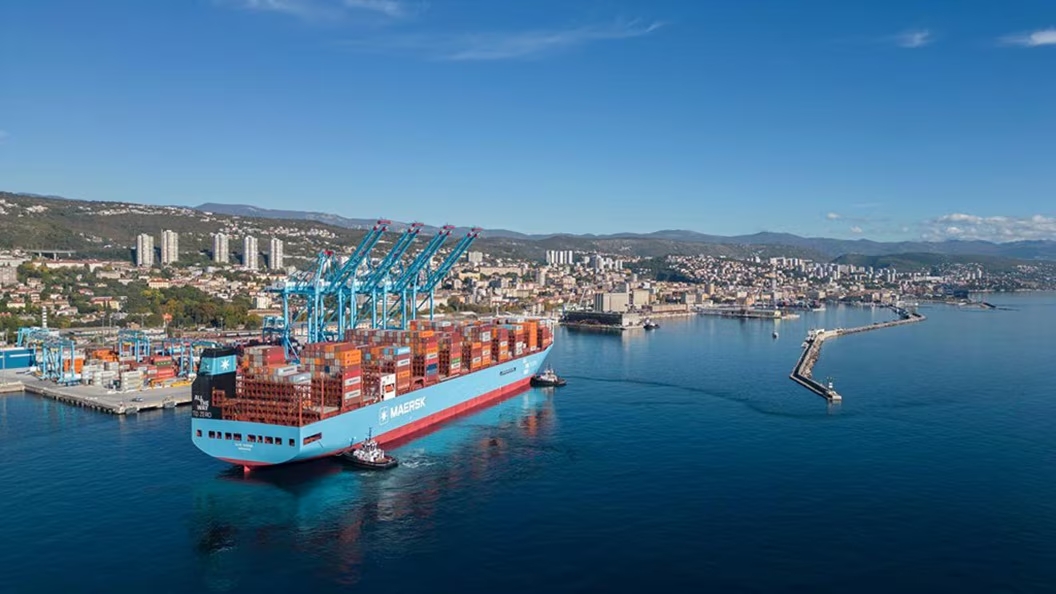
A. P. Moller – Maersk reported ongoing disruptions to global logistics operations amid the escalating situation in the Middle East. Geopolitical tensions have disrupted regular routes, increased delivery times, and reduced shipping predictability. At the same time, European ports are experiencing additional challenges: in Rotterdam, storms and strong winds are delaying vessel arrivals and complicating terminal operations, which has already led to a critical increase in container stacking density. Customers are being asked to pick up imported containers immediately after unloading to avoid further overloading. Difficult weather conditions since January have also affected Western Mediterranean terminals, where the SAMBA service is forced to skip certain ports of call to restore schedules.
Additional risks are associated with the approaching Easter holidays in early April, when labor shortages are expected at terminals, particularly in Germany. Amid rising global energy prices, exacerbated by the situation in the Strait of Hormuz, Maersk announced temporary adjustments to fuel and energy surcharges for land and intermodal shipping in several countries. In Spain, the Rubí railway tunnel between Castellbisbal and Rubí will be completely closed for five to seven weeks from March 14, following a decision by infrastructure operator ADIF. This forced Maersk to suspend rail services between Barcelona and Toulouse, as well as Barcelona and Lyon, and seek alternative routes.
The company also reported increased operational issues in Rijeka, Croatia, for shipments to Serbia due to incorrectly completed or late submission of documents, leading to border delays and additional costs. Consequently, a new Destination Coordination Fee of €65 per container will be introduced starting April 16 for non-compliance with documentation requirements. Significant pressure also remains in the Asia-Europe air freight market, where approximately a third of capacity traditionally transits the Middle East. To mitigate this, Maersk is offering alternative multimodal solutions via Oman, Colombo, and the land corridors of the Persian Gulf countries. The company also notes that these changes are particularly acute in the e-commerce sector, where demands for speed, transparency, and delivery reliability continue to grow amid increasingly complex cross-border logistics.