

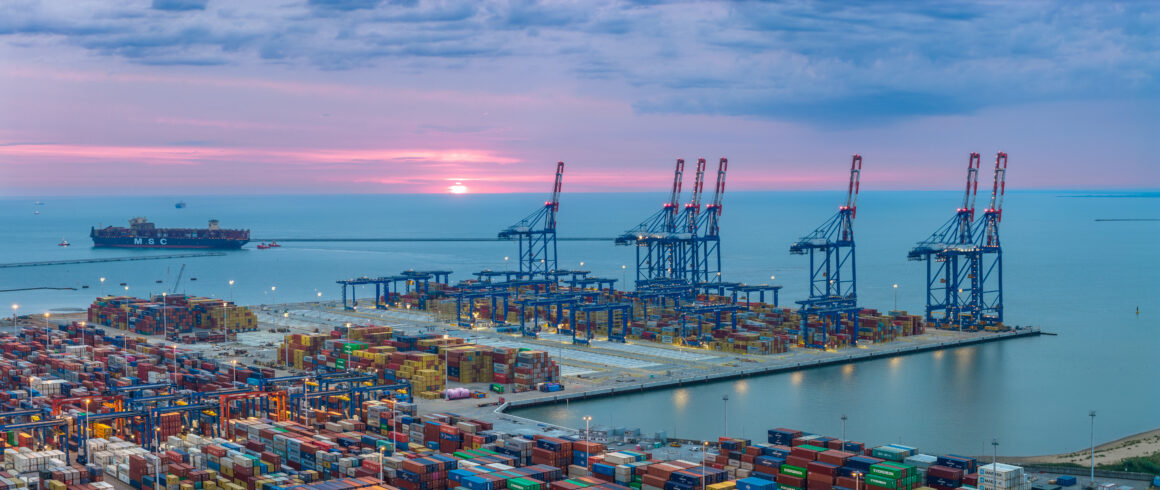
The Baltic Hub container terminal concluded 2025 with record transshipment figures, driven by large-scale investments and the expansion of its maritime services network. By the end of the year, the terminal handled 2,767,287 TEU, a 23% increase compared to the previous year and the highest result in the facility’s history. This growth was driven by the commissioning of the new Terminal T3, an increase in ocean services, and stable supply chain operations. In October 2025, Baltic Hub also set an operational record, handling 20,962 TEU during a single call by the vessel OOCL Japan.
In 2025, the terminal handled 763 vessels, including 265 ocean-going vessels, compared to 642 calls in the previous year, including 147 ocean-going vessels. A key event of the year was the completion of Terminal T3, the largest port investment project in the Baltic Sea region. Following its official opening in June and reaching full operational capacity in October, Baltic Hub’s total throughput capacity increased by 1.5 million TEU to 4.5 million TEU per year. The new 36.4-hectare terminal features a 717-meter-long quay with a depth of 17.5 meters, seven STS cranes for handling the largest container ships, and 20 aRMG remotely operated cranes, all powered by renewable energy.
The past year also saw a significant expansion of the port’s service offerings. Baltic Hub began handling three weekly Maersk services as part of the Gemini Cooperation alliance, welcomed new ocean lines MSC Britannia and Albatros, and received the PLS service from operator ONE, strengthening its connections with ports in Western Europe and the United States. Rail operations also increased: in 2025, the terminal handled 9,362 trains. In 2026, Baltic Hub plans to further develop its railway infrastructure and gate complex, focusing on unlocking the full potential of T3, increasing operational reliability, and promoting sustainable logistics development in the region.