

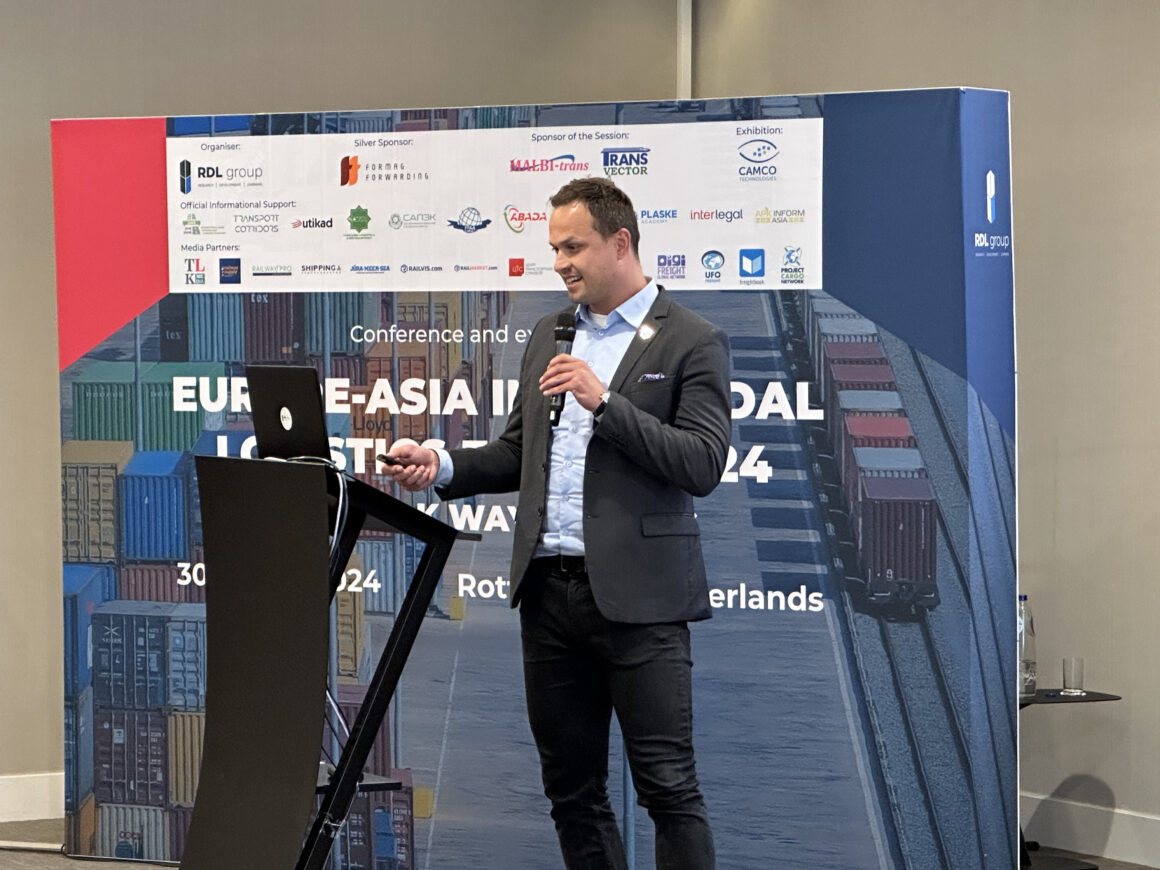
Ctirad Klimanek, Managing Partner of RAILVIS.com, shared the idea that in the field of European rail logistics, several exemplary models and innovative approaches set benchmarks for the development of the industry. For example, Italy stands out for its regional policy requiring rail connections for warehouses, thereby significantly increasing intermodal transport volumes.
Austria’s commitment to renewing railway sidings at the regional level is another commendable model that actively supports increased rail freight volumes. Likewise, Switzerland’s secure freight train transit capabilities serve as an example of the effective management and use of railway infrastructure, serving as a role model for other countries.
Moreover, advances in railway technology, such as hybrid locomotives such as the Euro 9000, capable of running on both electric and diesel power, highlight Europe’s progress towards sustainable and flexible transport solutions. Innovative freight cars that allow loading and unloading from multiple sides further increase operational flexibility and efficiency.
Innovative products such as the mobile solution from Rail Cargo Austria and the R2L connection from VTG are also crucial for the development of European rail logistics, enabling greater adaptability and responsiveness to market demands. The concept of a single car system opens up another opportunity, potentially revolutionizing the way individual freight is handled on national and private rail networks, promoting competitiveness with road transport.
“Overall, these initiatives and innovations underscore Europe’s commitment to improving rail logistics, promoting efficiency, flexibility and sustainability in freight transport across the continent. As these models and technologies continue to develop, they pave the way for a more integrated and reliable European rail network, capable of effectively meeting future challenges and demands,” shared Ctirad Klimanek.
Digitalization offers significant opportunities for the development of European rail logistics, bringing greater operational efficiency and transparency throughout the industry. Thanks to digital platforms, companies now benefit from a better understanding of terminal and track capacity, as well as railcar and locomotive availability. These platforms not only display train capacity and available space, but also facilitate efficient pricing and booking processes, providing competitive fares in real time.
RAILVIS.com illustrates this digital revolution by offering a platform where companies can display and request railcar and locomotive capacity. It optimizes freight quote requests, allowing instant quotes and bids, optimizing the use of resources on European railways. The platform currently serves more than 300 companies across Europe, demonstrating its wide influence and reach.
However, despite these achievements, problems remain, especially with regard to European Union policies that often favor road transport over railways. This trend is concerning because railways are the most environmentally friendly mode of transport, minimizing carbon emissions and congestion. Countries such as Austria, Italy and Switzerland have taken proactive steps to independently support their rail industries, demonstrating successful models that prioritize sustainability and efficiency.
Additionally, while innovative solutions such as Digital Automatic Coupling (DAC) and European Train Control System (ETCS) promise to improve safety and automation, their high costs threaten the competitiveness of rail transport compared to road alternatives. The balance between innovation and cost efficiency remains crucial for the future viability of European rail logistics.
“Railmarket.com represents a key innovation in the rail industry, which has become especially important during the COVID-19 pandemic, when traditional trade fairs and conferences have been disrupted. This digital platform serves as a comprehensive showcase where companies across Europe and Asia can present their products and services in a digital format. Each company has its own profile page, which presents its offerings to a global audience in the rail sector, making this virtual exhibition accessible to all industry stakeholders,” said Ctirad Klimanek about the platform.
With a database of over 5,000 companies, including companies from Kazakhstan, China and other Asian markets, Railmarket promotes networking and information exchange. Available in more than 12 languages, including Chinese, it acts as a vital communication tool to reach diverse audiences and promote international cooperation within the railway community.
In addition, Railmarket publishes news articles about products and services, disseminating industry news throughout the Euro-Asian continent. Despite its rapid growth and status as one of the world’s top five rail media outlets in just two years, Railmarket remains committed to accessibility, offering all content free of charge, ensuring users can access information, find partners and participate in industry discussions without financial costs.