

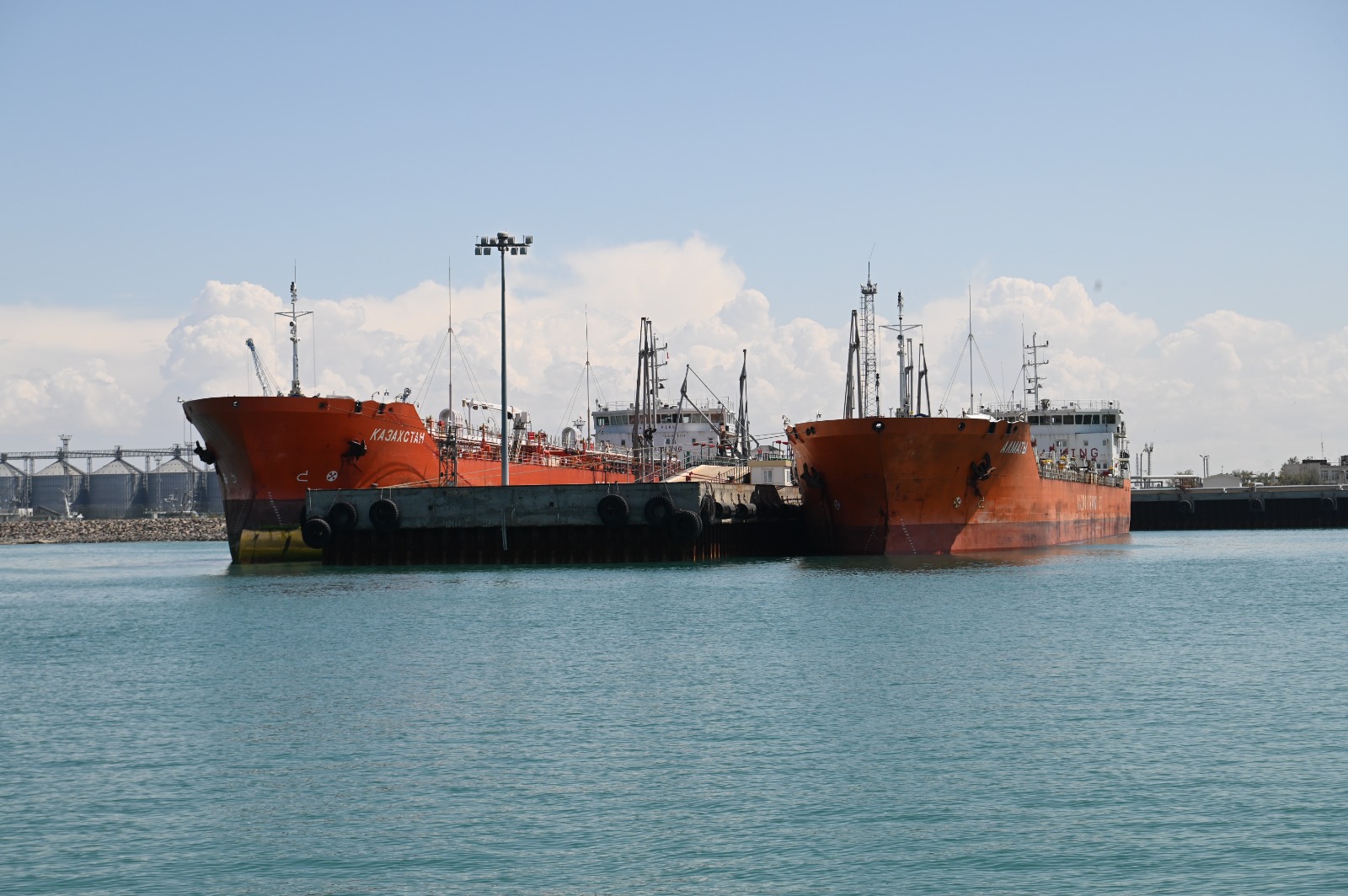
The development of Kazakhstan’s ports on the Caspian Sea opens up significant prospects for the country. Lidiya Parkhomchik, a leading expert at the Institute of World Economy and Politics, emphasized that the Trans-Caspian International Transport Route (TITR) plays a special role in Kazakhstan’s transport strategy. The route connects the ports of Aktau and Kuryk with Baku, providing an important multimodal corridor for cargo transportation. It is expected that in 2024, the volume of transportation along the TITR will increase from 2.7 to 4.2 million tons.
Parkhomchik noted that the development of ports is not limited to the Middle Corridor. Kazakhstan is actively increasing the capacity of its ports in order not only to develop transit potential, but also to strengthen economic ties with the Caspian countries.
“Our mutual trade turnover (with Azerbaijan – ed.) is largely based on trans-Caspian transportation,” she emphasized, emphasizing the importance of bilateral relations.
Kazakhstan plans to increase port capacity to 30 million tons per year by 2029. The increase in the number of ship calls and the active use of Caspian routes require the renewal of the fleet and infrastructure. In 2022, Kazakhstan began shipping oil along the route to Baku, which required the renewal of the tanker fleet and the attraction of new vessels.
In addition to oil, container cargo traffic is also increasing, which is facilitated by the creation of a container hub in the port of Aktau. Kazakhstan continues active cooperation with foreign partners, such as the Chinese company PSA International Pte Ltd, which is involved in the digitalization of the Caspian segment of the TITR.
“Attempts to digitalize the Trans-Caspian Corridor, especially in the Caspian segment, have been made repeatedly. Last year, Kazakhstan, together with the Singaporean company PSA International Pte Ltd, launched a pilot project to digitalize this section of the TMTM. However, in order for this route to fully operate, both Azerbaijan and Georgia need to be involved. 2024 should be another milestone that will show how well this digitalization system works,” Parkhomchik noted.
It is expected that further development of infrastructure and containerization of cargo flows in Kazakhstan will contribute not only to the growth of transit potential, but also to strengthening economic cooperation with partners throughout the Caspian region.