

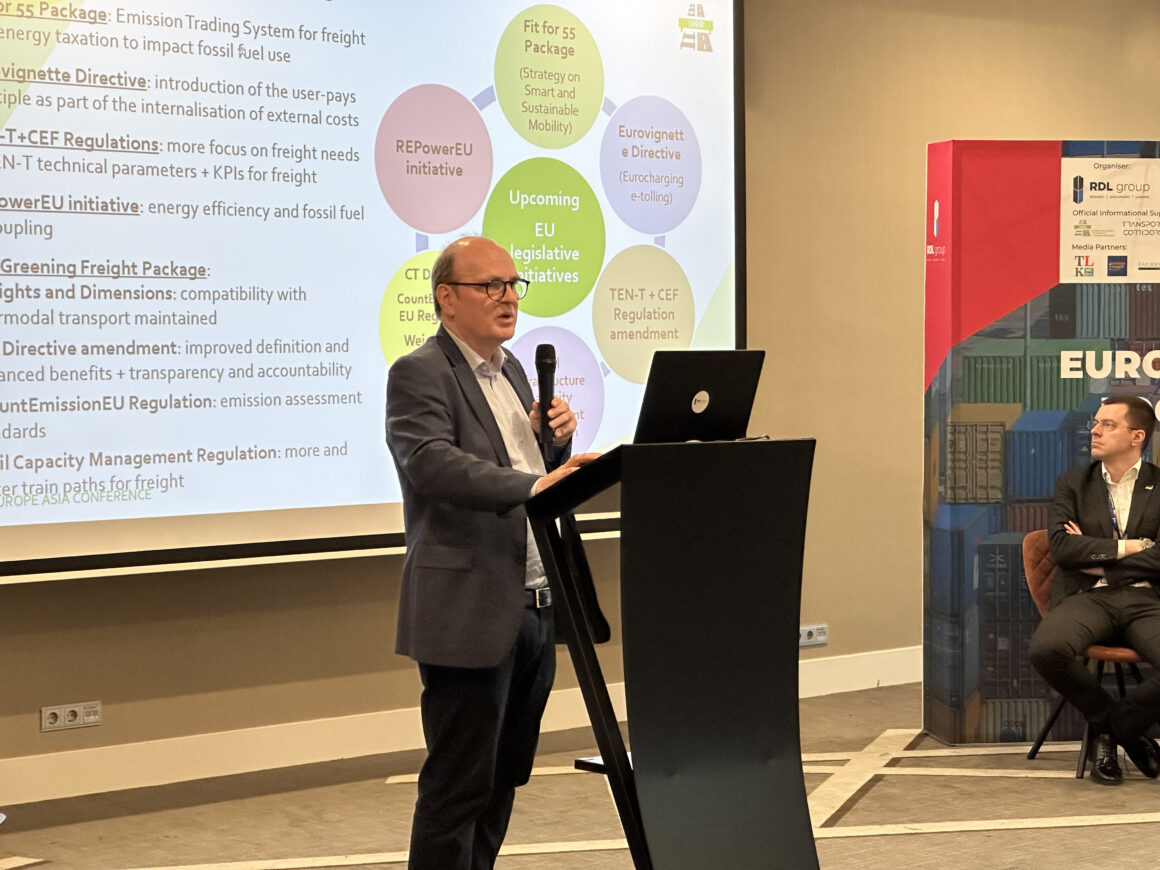
Ralf-Charley Schultze, President of UIRR, spoke about the Intercontinental Cooperation Platform, aimed at developing cooperation between stakeholders and aligning efforts to achieve common goals, such as infrastructure development and digitalization. And even despite delays in the first meeting, cooperation with representatives of the European Commission underscores the association’s desire to involve politicians in their endeavors.
If we recall the past years, filled with the problems of the Covid-19 crisis, we can now note a noticeable recovery of indicators to pre-pandemic levels, which means both setbacks and opportunities. Excess capacity created during peak periods underscores the sector’s resilience and willingness to capitalize on new opportunities. Moreover, significant investment in intermodal assets, from railcar fleets to digitalisation, is positioning the European intermodal sector to recover strongly and continue to grow.
Historical perspectives added depth to the discussion, providing an opportunity to trace key moments such as the invention of the container in the 1950s, which revolutionized global trade by connecting continents. In addition, previous crises, from energy shortages in the 1970s to pollution issues in subsequent decades, have stimulated innovations such as the concept of mode shifting, highlighting the sector’s adaptability and capacity for transformative change.
The Commission’s Smart and Sustainable Mobility Strategy sets a decisive backdrop to achieve zero-carbon combined transport by 2050 and ambitious targets to exceed 2020 levels. The passage of the Green Deal in 2019 marked a decisive shift in policy toward green initiatives, ushering in a wave of legislative proposals unprecedented in transportation history.
European freight transport regulations have undergone a major overhaul with the Fit for 55 package, which includes directives such as the 10-tonne weight rule and train sizing guidelines that set the parameters for future transport infrastructure. Although initiatives such as Repower EU and the Green Freight Package have been introduced, debate continues over the stringency of emissions rules, highlighting the need for more ambitious measures.
Today, the digitization landscape in transport is rapidly evolving, with regulations such as TAF TSI and electronic freight information paving the way for paperless interactions between businesses and authorities. Platforms for managing dangerous goods and defining standards for combined transport are being developed alongside the European Mobility Data Space, highlighting the importance of standardization and interoperability across Europe.
“The European Railway Agency (ERA) and the UIC play a key role in shaping safety and interoperability standards across Europe’s transport networks. Efforts to align these standards with international norms, particularly ISO, are aimed at streamlining operations and promoting market cohesion. The Green Freight Package represents a historic opportunity within the Combined Transport Directive and ongoing discussions in Parliament and the Council indicate progress towards its adoption,” shared Ralf-Charley Schultze.
Weight and dimension rules have also come under scrutiny, with compromises found to allow gigaliners and megatrucks to be included under certain conditions. However, the focus remains on maintaining a balanced freight mix for efficient rail transport, highlighting the importance of lighter freight to maximize train capacity.
The Combined Transport (CT) Directive is the focus of industry attention, with trilogue discussions currently taking place between the commission, parliament and council. At the same time, promotional campaigns have highlighted the environmental benefits of combined transport, noting its superior energy efficiency and reduced CO2 emissions compared to traditional modes of transport.
“Achieving zero-carbon combined transport is not just an aspiration, but a real possibility, as existing electrification infrastructure supports immediate action. Estimated annual investment of €18 billion across Europe could push the sector towards this goal, supported by advocacy efforts spanning Brussels, national capitals and digital platforms.
However, concerns remain about the proposed measures under the Weights and Dimensions Directive, which appear to be contrary to the main goal of improving intermodal transport and reducing CO2 emissions. Finding a balance between regulatory stability and environmental imperatives remains a key challenge as the sector moves towards sustainable transport solutions,” said Ralf-Charley Schultze.
As we approach 2024, a shift in policy discourse signals a shift away from the Green Deal to one that is likely to emphasize industrial sustainability. Reports from figures such as Enrico Letta and Mario Draghi highlight a new emphasis on competitiveness and sustainability across sectors. This shift is giving rise to new priorities focused on energy dependence, infrastructure, labor and environmental sustainability, areas where combined transport is again becoming a viable solution.
“As we adapt to this evolving approach, we must emphasize not only the environmental sustainability of combined transport, but also its economic and social sustainability, especially its role in improving labor efficiency. Recognizing the importance of this multifaceted approach, we are launching a second campaign aimed at highlighting our sector’s contribution to these critical areas.
The campaign, which will launch in the summer, will feature refreshed branding and will coincide with the release of new research on workplace performance. It is also vital to maintain close ties with EU member states, especially as decision-making shifts to the Council during tripartite discussions. Collaboration and advocacy at this level will be critical to shaping policies that meet our goals,” shared Ralf-Charley Schultze.
In recent years we have been faced with a new challenge in crisis management: numerous works are planned in Germany which have led to long-term closures of railway lines. These closures pose a serious threat to rail transport, risking a reversion to road transport if alternative solutions are not quickly implemented. Additionally, extreme weather conditions, strikes, natural disasters and accidents further exacerbate these problems, requiring effective crisis management strategies to maintain trust in the system.
Various crises such as the Danish bridge incidents and the Italy block collapse, as well as broader issues such as the energy price crisis and conflicts such as the war in Ukraine, are contributing to disruptions in global trade and slowing economic growth in Europe. In this challenging situation, the focus remains on finding the right solutions and ideas while prioritizing key areas for success.
Quality of freight transport and improvement of intermodal transport infrastructure are identified as key areas of focus, along with efforts to integrate horizontal transshipment into existing structures. Standardization, interoperability and identification markings are critical components of this effort to provide optimal solutions for the industry.
Intensifying digitalization is also a key priority, with plans to present a road map for the next five years to the new parliament and commission outlining desired outcomes and milestones. The changing political landscape with the upcoming board presidencies opens up opportunities to advance initiatives such as the green freight package, especially the combined transport directive.
“As we address these challenges, adaptation is key: the industry’s vision, mission and strategy are adjusted to reflect the changing context. The outcome of the upcoming elections, including the potential appointment of a new commission president, remains uncertain, underscoring the importance of citizen participation in shaping the future of transportation policy.” – Ralf-Charley Schultze concluded his speech.