

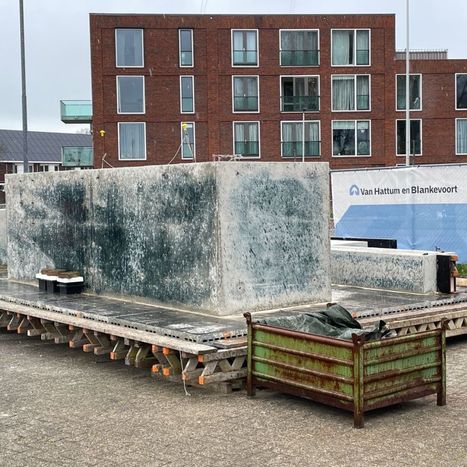
როტერდამის პორტის ადმინისტრაცია ემჰავენში გეოპოლიმერული ბეტონის საცდელ ცდას ატარებს, რაც ამ უცემენტო ბეტონის საზღვაო გარემოში პირველად გამოყენების მაჩვენებელია. ტრადიციული ცემენტისგან თავისუფალი გეოპოლიმერული ბეტონი CO2-ის ემისიების 50% შემცირებას ავლენს, რაც შეესაბამება პორტის ადმინისტრაციის ვალდებულებას პორტის ეკოლოგიურად სუფთა განვითარების მიმართ. ეს ინოვაციური მიდგომა გულისხმობს გამაგრებული გეოპოლიმერული ბეტონის გამოყენებას მარილიან გარემოში, ცემენტის ალტერნატიული შემკვრელით ჩანაცვლებით, რათა მიღწეული იქნას ემისიების მნიშვნელოვანი შემცირება.
As part of its sustainability initiative, the Port Authority aims to replace certain quay walls, maintaining 80 kilometers of quay walls and 200 kilometers of slopes. Developed with ‘Innovative Sqape technology – SQAPE,’ the geopolymer concrete mix was tested by pouring formwork for a quay wall structure and beams during the trial. Looking ahead, the Port Authority plans to implement this environmentally friendly concrete in a quay wall at the Tweede Petroleumhaven by the end of 2023, monitoring its performance over the subsequent years. This trial not only reflects the Port Authority’s commitment to reducing its CO2 footprint but also serves as a valuable learning experience for the practical aspects of working with geopolymer concrete, contributing to the long-term goal of sustainable port infrastructure.
Image source: https://www.portofrotterdam.com/en/news-and-press-releases/port-of-rotterdam-authority-trials-the-use-of-cement-free-concrete-in-the