

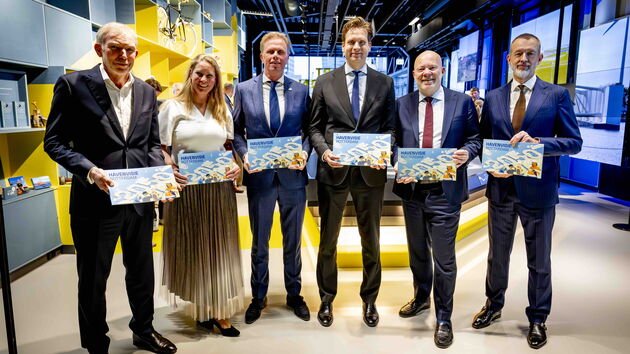
The City of Rotterdam and the Port of Rotterdam Authority have approved the Port Vision 2050 strategy, which aims to make the port the most competitive, sustainable, and reliable port in Europe by mid-century. The document was developed jointly with the Province of South Holland, the Dutch central government, and the port’s business community, as well as with the participation of over 100 companies, government agencies, research organizations, regional residents, and young people. The Rotterdam City Council officially endorsed Port Vision 2050 on December 18, 2025.
Rotterdam Port Authority CEO Boudewijn Siemens noted that the new strategy builds on the port’s existing innovative foundation but also sets new priorities: improving the investment climate, strengthening strategic autonomy, and addressing space constraints, including potential seaward expansion. Public-private partnerships and the creation of an attractive investment environment, including competitive energy prices and infrastructure modernization, are identified as key elements in implementing Port Vision 2050.
According to the strategy, the Port of Rotterdam aims to become climate-neutral by 2050 and play a central role in the transition to a circular economy. Key areas include “flexibility and resilience” in the face of geopolitical risks, the development of “smart and clean” logistics, the transformation of industry into a hub for circular and strategic materials, improving the quality of the urban environment, and shaping the labor market of the future. Particular emphasis is placed on supply diversification, the development of renewable energy, digital security, and the ability to quickly switch between modes of transport to minimize supply chain disruptions.