

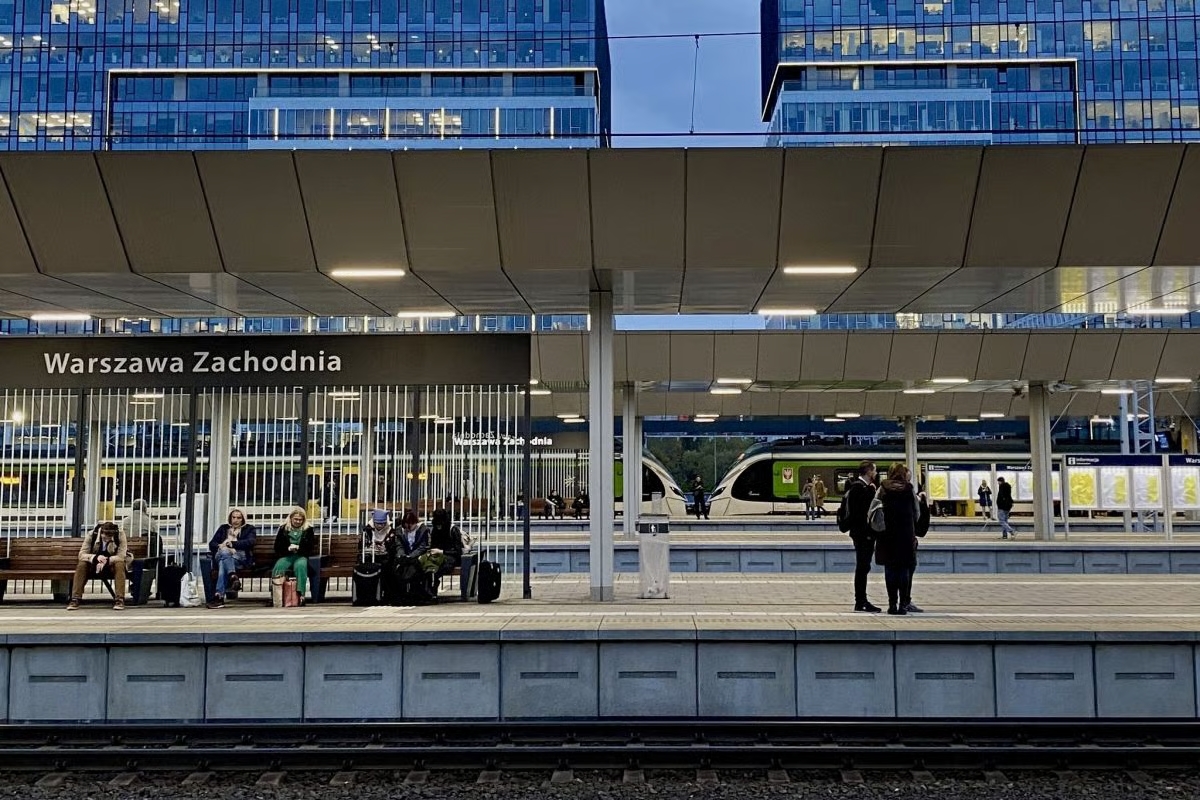
Rail transport in Poland entered 2026 with diverging trends, as passenger traffic continued to grow strongly while freight volumes remained below last year’s levels.
According to UTK, in the first two months of the year, rail carried nearly 70 million passengers, representing a 6.5% year-on-year increase. Passenger-kilometres also rose by almost 8%, confirming sustained demand for rail services across both regional and long-distance segments.
February alone saw almost 34.5 million passengers, marking the highest February result in over a decade and reinforcing the upward trend in rail usage.
By contrast, rail freight continues to face pressure. In January–February, total volumes reached just over 32.5 million tonnes, a 5.1% decline year-on-year, with transport performance also down.
February results suggest a partial stabilisation, with volumes slightly improving compared to January. Around 16.4 million tonnes were transported, broadly in line with recent months, while operational performance indicators showed moderate growth.
For the rail freight sector, the figures highlight ongoing challenges linked to weaker industrial demand and shifting logistics patterns, particularly in bulk and traditional commodity flows.
At the same time, the data confirms that passenger rail remains a key growth driver, supported by increasing demand for sustainable mobility and continued investment in services and infrastructure.
The contrasting performance underlines a broader trend across Europe, where passenger transport is recovering strongly, while freight markets remain more volatile at the start of 2026.