

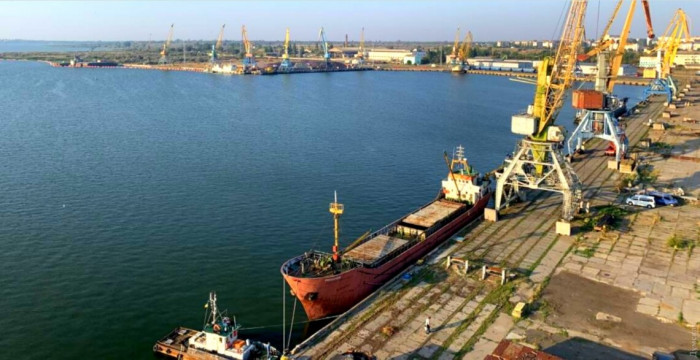
A working meeting was held in Izmail to discuss the current situation in the Danube region and Ukraine’s Black Sea ports, as well as overcoming the logistical challenges posed by Russia’s full-scale war against Ukraine. The discussion was attended by Andriy Kashuba, Deputy Minister for Communities and Territories Development of Ukraine; Alain Baron, a representative of the European Commission’s Directorate-General for Mobility and Transport (DG MOVE); and representatives of the Ukrainian Sea Ports Authority, Izmail Commercial Seaport, Ukrzaliznytsia, and the Ukrainian Danube Shipping Company.
A key topic of the meeting was agreeing on approaches to coordinating the support the European Commission could provide to Ukraine in the face of military risks. Kashuba emphasized the strategic importance of the Danube logistics route for exports and imports amid restrictions in the Black Sea and the need for close cooperation with the EU. Representatives of the USPA reported on the situation at Danube and Black Sea ports at the beginning of 2026, including the state of infrastructure, the consequences of damage, energy constraints, and route capacity. They also presented data on the use of €50 million in EU financial support for the restoration of critical infrastructure following Russian attacks.
Special attention was paid to infrastructure bottlenecks, including the dredging of the Danube, capacity upgrades, and work plans. The Port of Izmail, the USPA, the Ukrainian Danube Shipping Company, and Ukrzaliznytsia outlined their priority needs for the stable operation of the Danube route and Black Sea ports, including equipment, repairs, and technical assistance. Alain Baron presented the EU’s approach to developing alternative routes in the event of disruptions at Black Sea ports and reduced capacity on the Odesa-Danube route, as well as prospects for cooperation with Romania, including traffic planning, the use of the PRIMUS instrument, and the preparation of a memorandum of understanding. The parties agreed to further interaction and coordination at the expert level.