

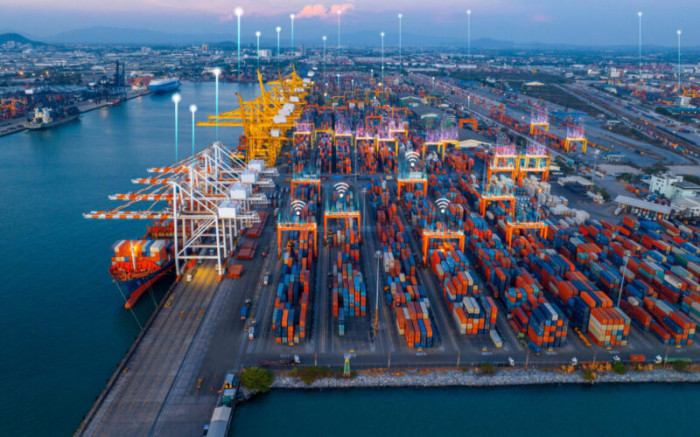
The global market for highly automated smart ports will increase from $2.53 billion in 2025 to $7.95 billion by 2030, growing at a CAGR of 25.8%. According to MarketsandMarkets, the growth is driven by the growth of international trade, the need to reduce emissions and port congestion, and the desire of governments and businesses to improve the efficiency and sustainability of logistics.
Sea ports, where the share of cargo turnover is significantly higher than in inland terminals, are rapidly becoming digitalized. Already today, the world’s largest hubs – Tuas, Shanghai Yangshan, Busan and Vizhinjam – are introducing AI cranes, autonomous carriers, digital twins and blockchain-based document management, which reduces cargo handling time and costs. Such projects are supported by government programs and private investment, and are also in line with decarbonization requirements.
The Asia-Pacific region, home to the world’s largest and most technologically advanced ports — Singapore, Shanghai, Busan — will become the market leader in the coming years. Large-scale government initiatives, such as China’s Belt and Road Initiative and India’s Sagarmala program, are contributing to development here. The region is actively investing in intelligent solutions to manage growing cargo flows, minimize environmental impact, and strengthen global supply chains.