

The updated cost-benefit analysis confirms the economic viability of the Rail Baltica project, expecting it to generate a net economic benefit of €6.6 billion. The additional indirect impact is estimated to range from €15.5 billion to €23.5 billion, including aspects such as military mobility, environmental sustainability, social equity and supply chain impacts. The project has evolved significantly since the last review in 2017, including new stations and infrastructure elements in Lithuania. The pandemic, the war in Ukraine and a 40% rise in inflation have also impacted the cost of the project, which is now estimated at €15.3 billion for completion by 2030.
Independent appraisers attribute the increase in the value of Rail Baltica to several factors:
- 31% of the increase is due to improvements in design developments from 2017 to 2023;
- 51% is due to more complete calculations and lack of reserves in the original estimates;
- 18% is due to external requirements and changes that have arisen over the past six years.
The project cost is estimated at €26 million per kilometre, slightly above the European average for similar high-speed rail.
The main findings of the study show that 80% of Rail Baltica’s benefits will come from passenger transport, 14% from environmental improvements, and 5% from freight transport. The project will integrate the Baltic region into the European railway network, stimulating GDP growth by 0.5-0.7 percentage points annually. The main drivers of growth include increased land values, tourism development, new business opportunities and increased productivity.
Rail Baltica also supports trade flows affected by geopolitical events and contributes to the recovery of Ukraine. The project improves energy security by switching to renewable energy sources and reducing fossil fuel consumption by 1.5-3.3%. It also improves safety by reducing pollution and the risk of accidents.
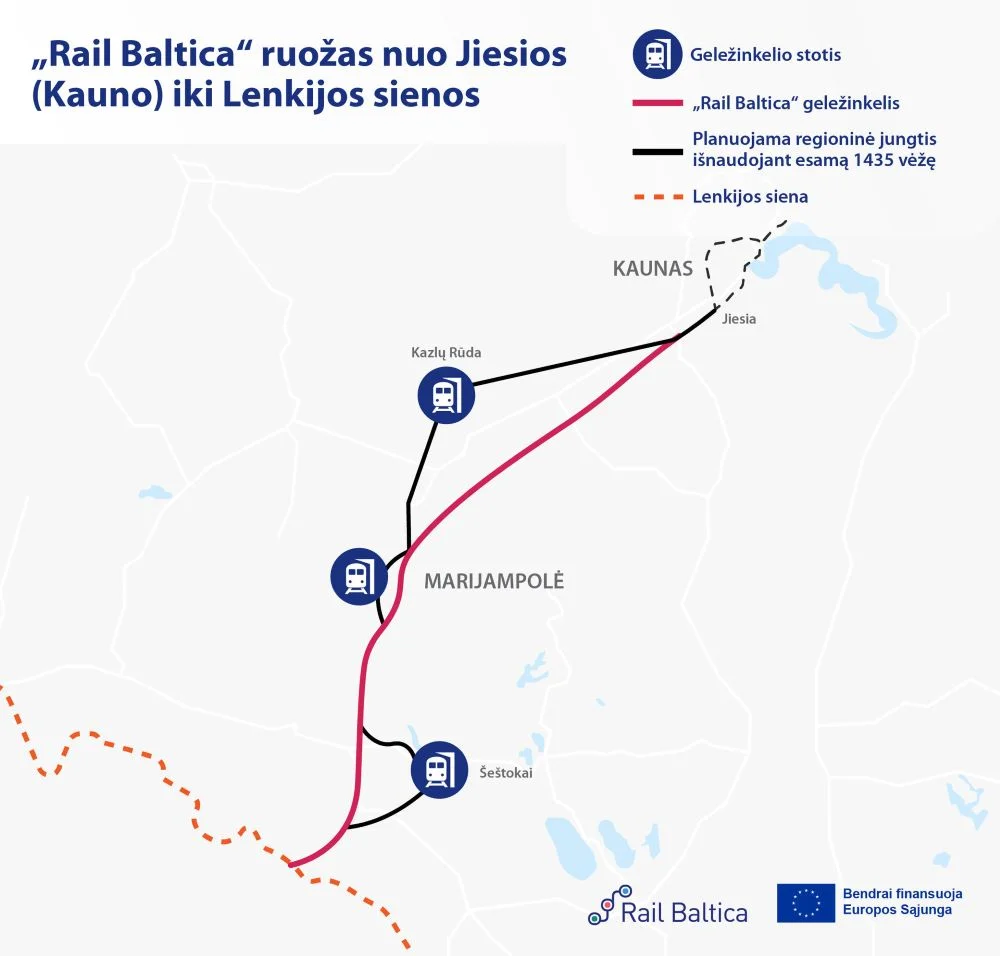
In 2024, Rail Baltica entered the next implementation phase: 15% of the main line will be under construction by the end of the year. In Estonia, construction has begun on 21 km of the main line, in Latvia more than 200 km are planned, in Lithuania work is underway on 29 km with plans to expand to 70 km. Today, more than 300 local and international companies from Europe are involved in the development of the project.