

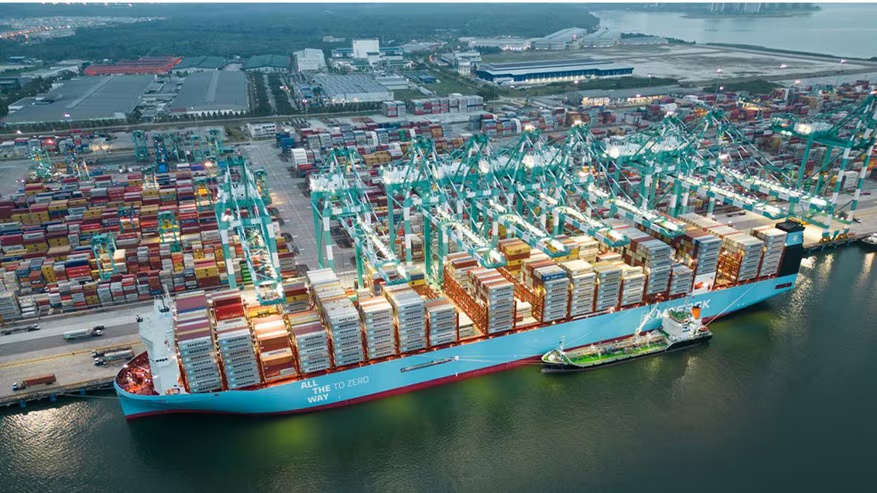
The global economy continued to grow moderately in Q3, but the pace remains uneven. The services sector remains the main driver, while industrial production is again struggling: the manufacturing PMI fell to 49.4, signaling a contraction. Manufacturers in the US and Europe are reporting a decline in new orders and a rise in inventories.
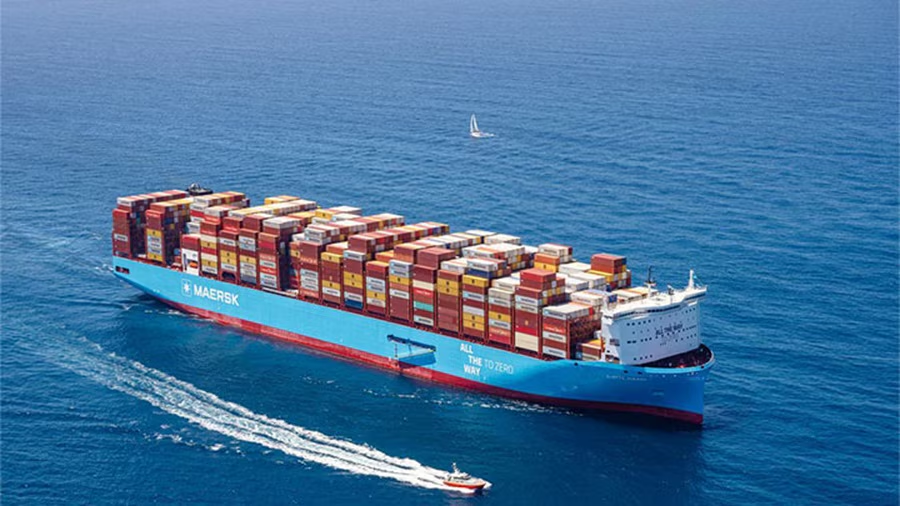
The US is leading global growth, thanks to the Federal Reserve’s rate cuts and robust consumer demand. In July and August, demand for goods rose 2.7% year-on-year, despite persistently high inflation. Container shipping also showed growth of 4-6% year-on-year, driven mainly by exports from China and Southeast Asia. However, the market remains volatile amid tariff cuts such as the Drewry WCI (down to $3,095 per FEU).
The transportation industry faces regional challenges. In Northern Europe, low water levels on the St. Lawrence River are limiting vessel capacity, while in North America, land freight volumes fell 0.3% in July-August, despite stabilization in the contract shipping segment. At the same time, regulatory changes and the shift to cleaner transport are putting pressure on the industry.
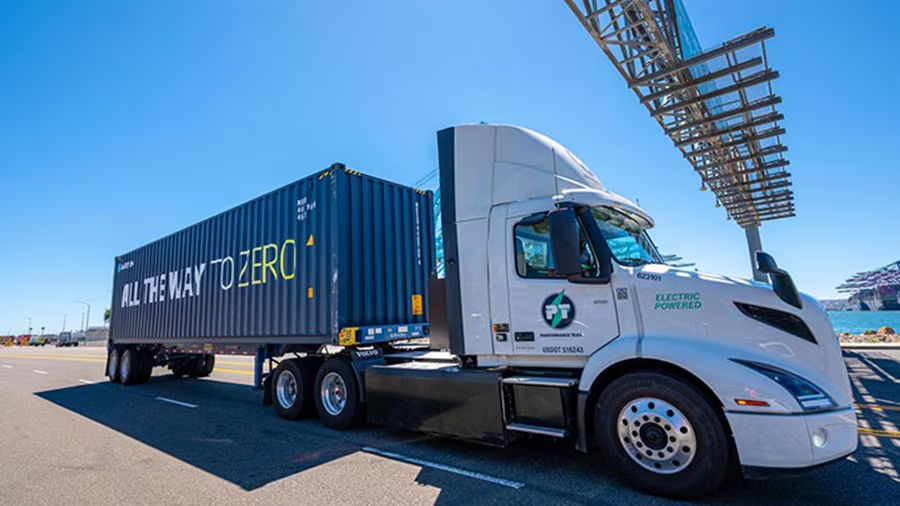
Air freight continues to grow, especially thanks to international cargo. Although jet fuel prices have fallen, geopolitical factors remain challenging, including the closure of airspace in the Middle East and the introduction of new tariffs between the US and China. However, increased e-commerce from Asia and strong demand for electronics are driving growth.
The current year is expected to end with growth in cargo volumes, especially in the air freight and container trade segments. Companies continue to adapt to market changes, implementing measures to reduce costs and increase resilience to external challenges.