

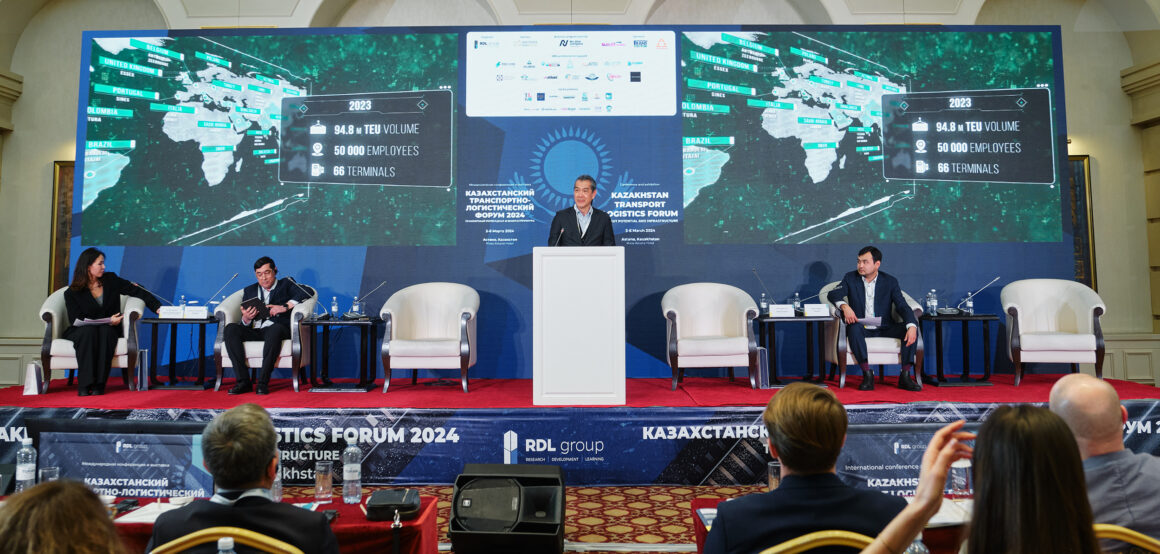
YEONG Wee Tan, CEO of Global DTC Pte Ltd, spoke about the digitalization of logistics processes along the Middle Corridor route. As a member of the PSA Group, Global DTC focuses on digitalization in Central Asia, complementing PSA’s strategy.
The company’s goal is to use technology and digital processes to improve efficiency and productivity, just as they have achieved significant results in PSA’s global network, which handles a staggering volume of containers equivalent to three containers per second. This feat was made possible thanks to technological solutions and process optimization.
Coming from Singapore, a country with limited resources, they have learned to maximize efficiency through technology and digitalization. Over the past 40 years, they have transformed customs, ports and terminals in 44 countries, and are now seeking to bring this knowledge and experience to Kazakhstan and Central Asia.
“PSA has invested heavily in developing a digital platform known as DTC, or Multi-Digital Trade Corridor, aimed at unlocking the potential of the middle corridor. This platform is designed to facilitate trade between various stakeholders involved in the process, including freight forwarders, shippers, cargo owners, carriers, railway authorities and customs,” said YEONG Wee Tan.
One of the key features of the DTC platform is to ensure 100% digital document flow. Currently, multiple document formats are used in different regions, leading to inefficiencies and delays. DTC aims to harmonize these formats, enabling seamless exchange of data electronically, eliminating the need for manual paper-based processes at borders.
Another important aspect is the tracking functionality and real-time tracking. It is important for stakeholders to know the exact location of the cargo along the entire Middle Corridor route. Providing transparency to customers, whether they are in China or elsewhere, instills confidence in the reliability and transparency of the corridor, ensuring its sustainability and competitiveness with other routes.
Within the DTC platform, customs compliance is the third important goal, addressing the challenge of navigating different customs regimes in different countries. The goal is to simplify clearance procedures and ensure compliance when goods cross borders. Automation of customs transit clearance at the Kazakhstan-China border has dramatically reduced processing time to 30 minutes, demonstrating the potential for increased efficiency.
The benefits of this are manifold:
- For governments, the key outcomes are increased trade, economic growth and increased transparency.
- Business clients benefit from reliability, transparency and user-friendly processes.
- Logistics companies participating in the event will have the opportunity to increase efficiency, reduce costs and expand business opportunities.
Essentially, the DTC platform seeks to create a common ground on which stakeholders can come together to leverage shared resources, promote mutual growth, and promote trade smoothly and efficiently.