

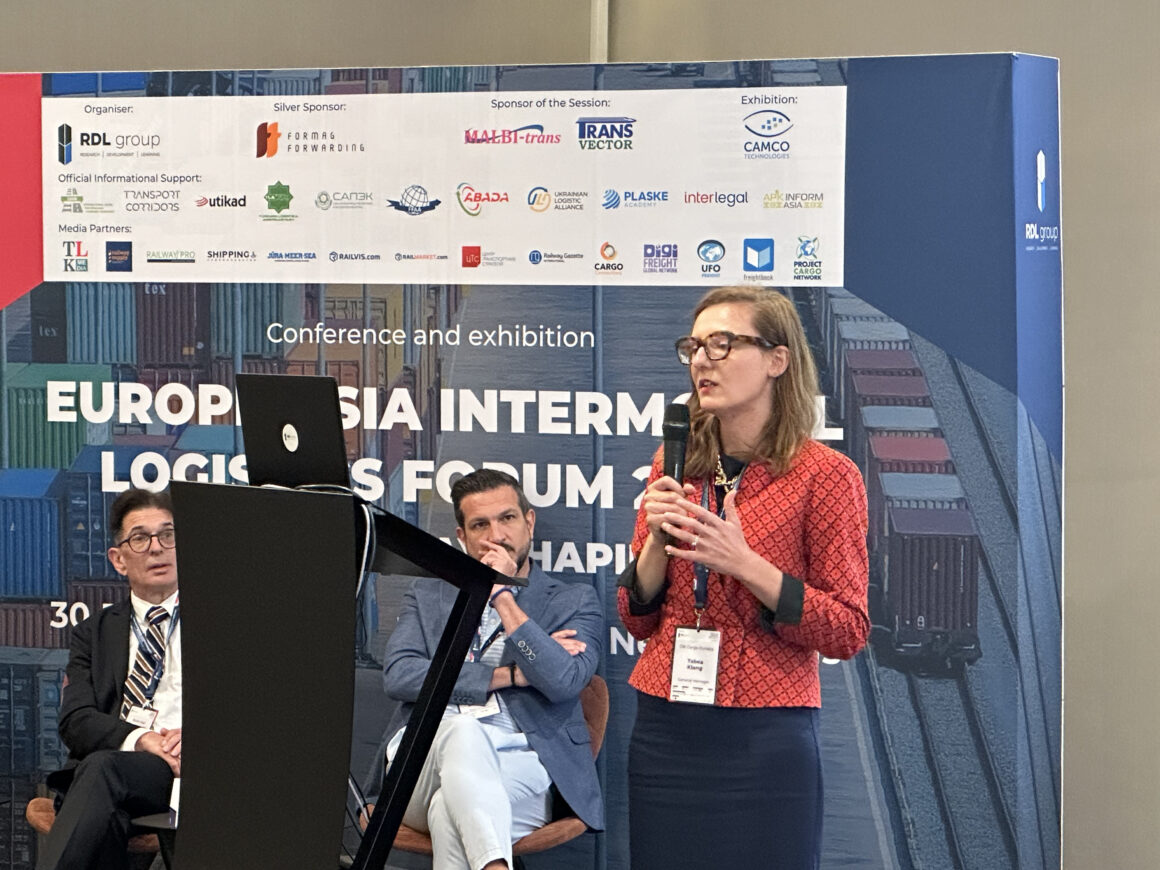
Tabea Klang, General Manager of DB Cargo Eurasia, discussed the topic of market changes and projects. DB Cargo Eurasia is a key player in the logistics sector, offering vital solutions for rail transport between China and Europe. Their services have become increasingly important due to various geopolitical events such as the Red Sea crisis and disruptions in the Suez Canal, which have threatened traditional supply chains. Demand for rail freight from China has increased over the past six to seven years, although it has fallen in 2023. However, recent crises have reaffirmed the importance of rail solutions, prompting more customers to seek long-term rail transport options.
One of the main advantages of rail transport is its relatively fast travel time. A typical journey by rail from China to Europe takes about 15 days, compared to more than 55 days by sea, especially when navigating South Africa. This speed, coupled with the stability of rail freight rates, which average around US$6,000 per container depending on destination, makes rail an attractive option. In contrast, sea freight rates have shown significant volatility, reaching US$12,000 on the Shanghai to Rotterdam route, while air freight rates have also fluctuated with changes in passenger capacity since the pandemic.
The types of cargo that benefit most from rail freight include components, electronic devices and, increasingly, e-commerce products heading west. Rail transport is beneficial for eastbound, fast fashion, cosmetics and retail goods. For example, a cosmetics company chose rail shipping over air shipping due to lower CO2 emissions, which is in line with their internal green strategy. Additionally, the speed of rail transport ensures that products arrive in China before they become obsolete, a significant advantage for fast-growing industries such as fashion and cosmetics.
DB Cargo Eurasia is part of the Deutsche Bahn group of German railways and has played a key role in providing rail transport between China and Europe since 2008. Operating through its subsidiary DB Cargo TransAsia, the firm has established a strong presence in this important market. While the majority of their cargo travels through the North Bridge, they also operate in the Middle Corridor, providing a variety of solutions such as block train services with over 40 containers and select transport solutions. A notable recent addition to their offering is a full-time scheduled train that currently runs twice a week from China to Europe and once a week in the opposite direction, with plans to expand to three different destinations by mid-2024 .
DB Cargo Eurasia also highlights the environmental benefits of rail transport, highlighting its environmental friendliness compared to other modes of transport. This aspect is becoming increasingly important as companies look to reduce their carbon emissions. Additionally, while geopolitical issues, including sanctions affecting dual-use goods, only affect eastbound traffic. Westbound traffic will remain unchanged, ensuring continuity of communication from China to Europe. The company has implemented high safety standards, such as door-to-door loading methods, to protect cargo, and has successfully addressed these challenges without significant disruption.
“In addition, DB Cargo Eurasia is negotiating climate-neutral and secure projects with its clients, including state-owned Chinese logistics platforms. We have a deep understanding of the regulatory landscape and offer expertise that helps clients navigate the complexities of international rail freight, ensuring compliance and operational efficiency,” added Tabea Klang.
One of the important issues for logisticians concerns the transportation of batteries. At the moment, Chinese railways are the only ones on the Eurasian corridor that do not yet allow the transport of lithium batteries or individual lithium batteries. However, the rules are gradually being relaxed. For example, from October 2022, the transport of lithium batteries built into electric vehicles, as well as devices such as power banks, laptops and cameras, is permitted.
Given these changes, it is clear that China is taking steps to adapt to new market demands and improve its environmental performance. This is especially important in the context of increasing attention to environmental responsibility and the desire to reduce the carbon footprint of supply chains. DB Cargo is confident that these initiatives will have a positive impact on the entire industry and will lead to more sustainable and environmentally friendly solutions in cargo transportation.