

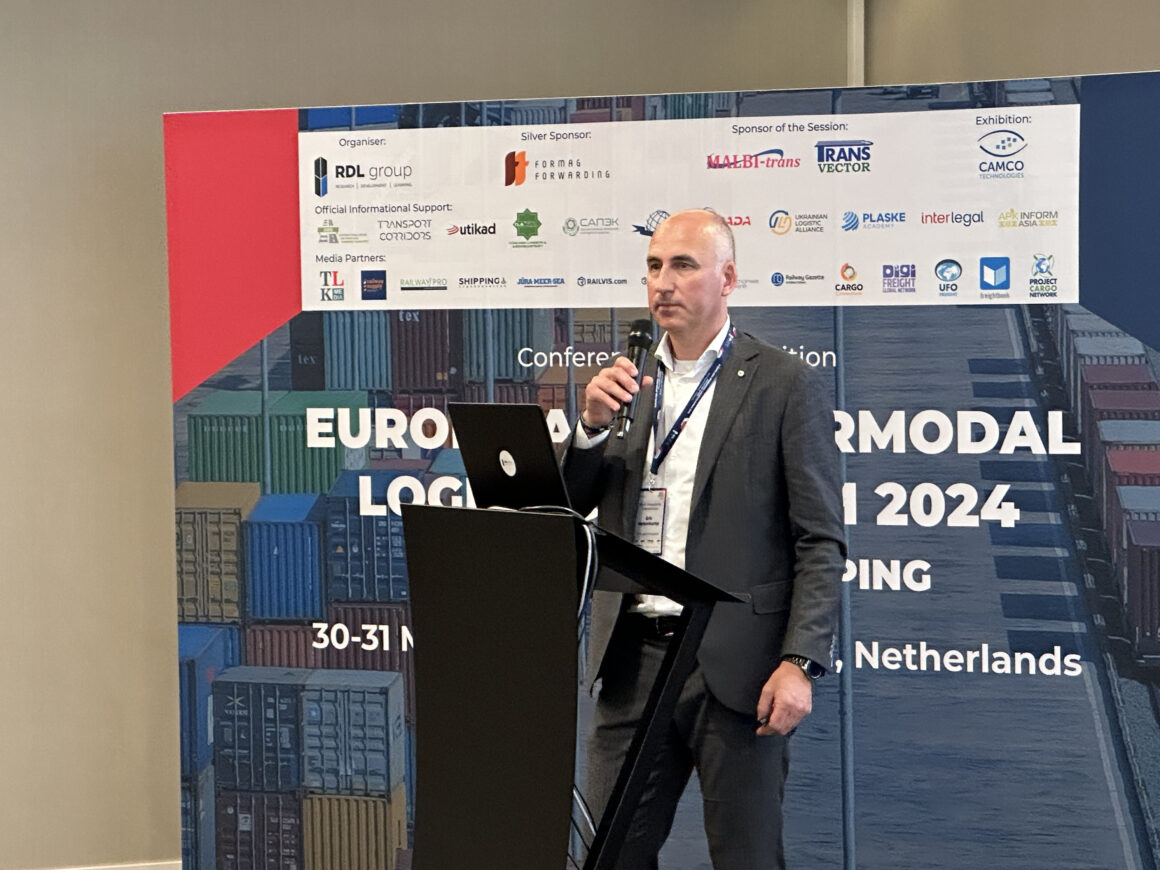
Eric Mekenkamp, Principal Consultant at Buck Consultants International, introduced the boutique consulting firm, headquartered in the Netherlands with additional offices in Asia and the Americas, specializing in economic consulting with a focus on logistics. Despite its small size, the company boasts a diverse team of 75 experts in each office, with a wide range of skills and knowledge. Their core mission is to help clients optimize supply chains around the world by offering expertise in site selection, supply chain strategies and corporate real estate strategies.
“Customers are exploring options beyond traditional hubs, looking at locations in Europe such as the eastern and southern regions, while reducing reliance on single sourcing and introducing more modalities into their supply chains. Our role is to guide them through this transformation by providing customized solutions to meet their evolving needs and challenges. As the global trade landscape continues to evolve, we remain committed to helping our clients overcome logistics challenges and achieve greater sustainability in their operations,” Eric Mekenkamp described the company.
In the Netherlands, BCI’s efforts are focused on three main freight corridors, each of which is critical for regional and international trade. These corridors, running from north to south, east to west and southeast, cover various modes of transport, including roads, rail, inland waterways and pipelines. The company’s approach goes beyond logistics hub optimization techniques to enable efficient communications and facilitate smooth supply chains.
Through a comprehensive program supported by investments from diverse stakeholders, they are leading initiatives to support the entire corridor ecosystem. Covering four key areas – future connectivity, logistics hub integration, sustainable corridors and digitalization – they drive innovation and efficiency across the entire supply chain. Projects range from expanding multimodal connectivity, to investing in automation and digitalization, and improving the resilience of the entire corridor network.
“As part of our consulting firm’s efforts, we are actively involved in developing innovative solutions to optimize existing infrastructure and improve logistics sustainability. One such innovation involves the use of smart sensors and cameras to increase the capacity of railway stations, as exemplified by successful pilot projects in Moerdijk and the Port of Amsterdam. Through these initiatives, we have demonstrated the remarkable potential to increase rail station capacity by 25%, demonstrating the transformative power of smart technologies in expanding rail operations without the need for massive infrastructure expansion,” shared Eric Mekenkamp.
In addition, digitalization remains a cornerstone of the company’s efforts, with a focus on leveraging digital technologies to optimize supply chain operations. Through collaborations with leading platforms such as Cargonaut and PortBase, as well as other government-funded initiatives, they are driving digital innovation to improve supply chain efficiency and connectivity.
Securing financing for large-scale logistics projects poses a significant challenge, especially when neither provincial governments nor private companies individually have the necessary resources. However, by pooling their resources and expertise through joint efforts, they can open up more opportunities for these endeavors, although funding remains a constant obstacle.
To solve this problem, logistics industry stakeholders are turning to European funds, using their collective power to access available grants and subsidies for eligible projects. While navigating the complexities of European funding programs can be challenging, collaborative efforts increase the likelihood of receiving financial support, allowing projects to materialize on a larger scale.
“In recent years, successful cooperation has led to significant investments from European Union funds, complementing contributions from private companies. For example, initiatives such as the secure truck parking in Rotterdam and the alternative fuel infrastructure project in Maasbracht have received significant support from European funds, along with investment in projects such as Rompus, which promote cooperation between inland terminals and ports.” Eric Mekenkamp gave an example.
Going forward, the importance of public-private partnerships in accessing financing for logistics projects cannot be overstated. By working together, stakeholders can overcome financial barriers and pave the way for stronger and more resilient trade corridors, ensuring continued growth and prosperity for the logistics industry.