

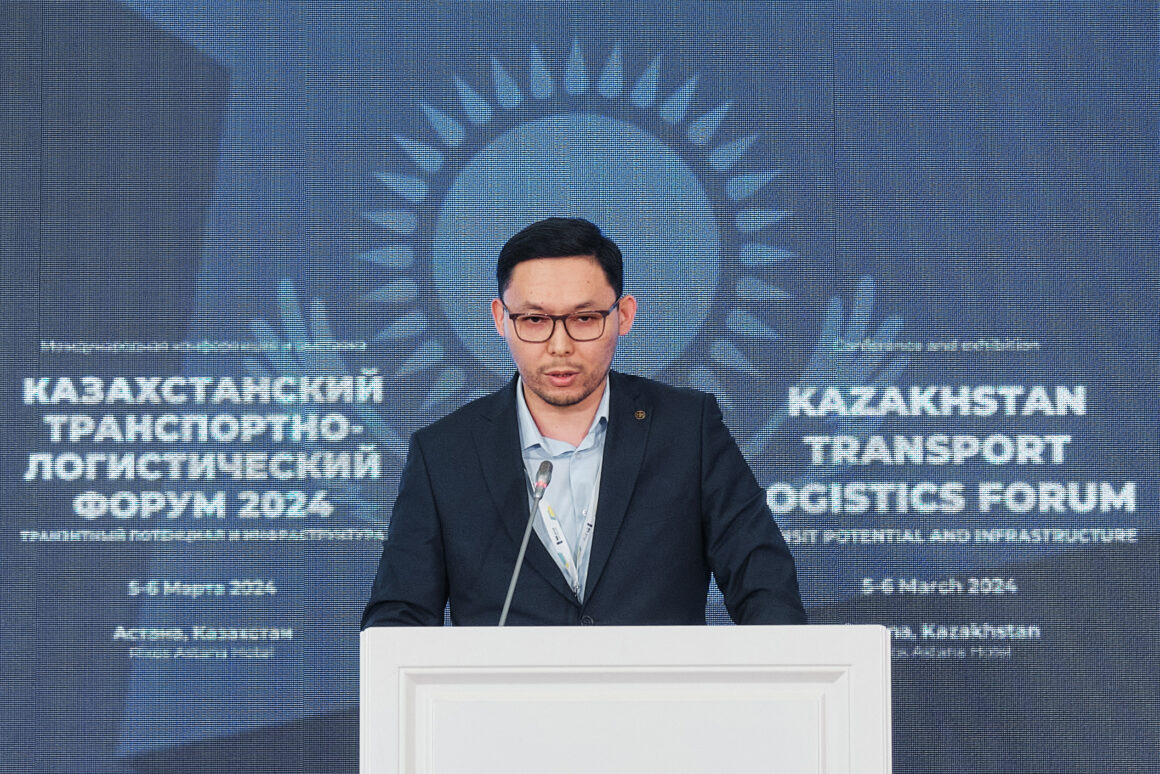
Azamat Tokanov, Commercial Director of TRANSLOGICOM LLP, said that transport corridors play a key role in the field of logistics, especially on the territory of the Eurasian continent, as well as in the territories of Kazakhstan and Central Asia. Different corridors have different levels of use and face different challenges.
The Northern Transport Corridor experienced a 45% decline in traffic in 2023, caused, according to analysts, by various factors. The average transport corridor (TMTC) in the same period showed a significant increase in traffic – 13 times.
The Southern Transport Corridor was rarely used due to infrastructure problems such as the lack of multimodal solutions in Central Asia and the lack of regular ferries at the port of Turkmenbashi. This necessitated the search for alternative routes.
Factors influencing the efficiency of transport corridors include:
- geopolitical conflicts,
- economic crises,
- regional problems.
Despite this, population growth and the constant need for goods highlight the importance of further development and optimization of transport routes.
Trade relations between China and the European Union continue, although there are some declines, but they are not significant. Alternative transport corridors, especially those connecting to industrial junctions, play an important role in maintaining these routes.
Construction is underway on the third border crossing between China and Kazakhstan, the length of which is 272 kilometers. The project, which began last year, aims to strengthen existing transport corridors and is scheduled for completion in 2027.
The second railway crossing between China, Kyrgyzstan and Uzbekistan has been discussed for a long time, but the exact timing of its implementation has not yet been determined. In the context of modern geopolitical realities, the Middle Transport Corridor (MTC) is a more relevant and reliable option, given the relocation of other transport routes.