

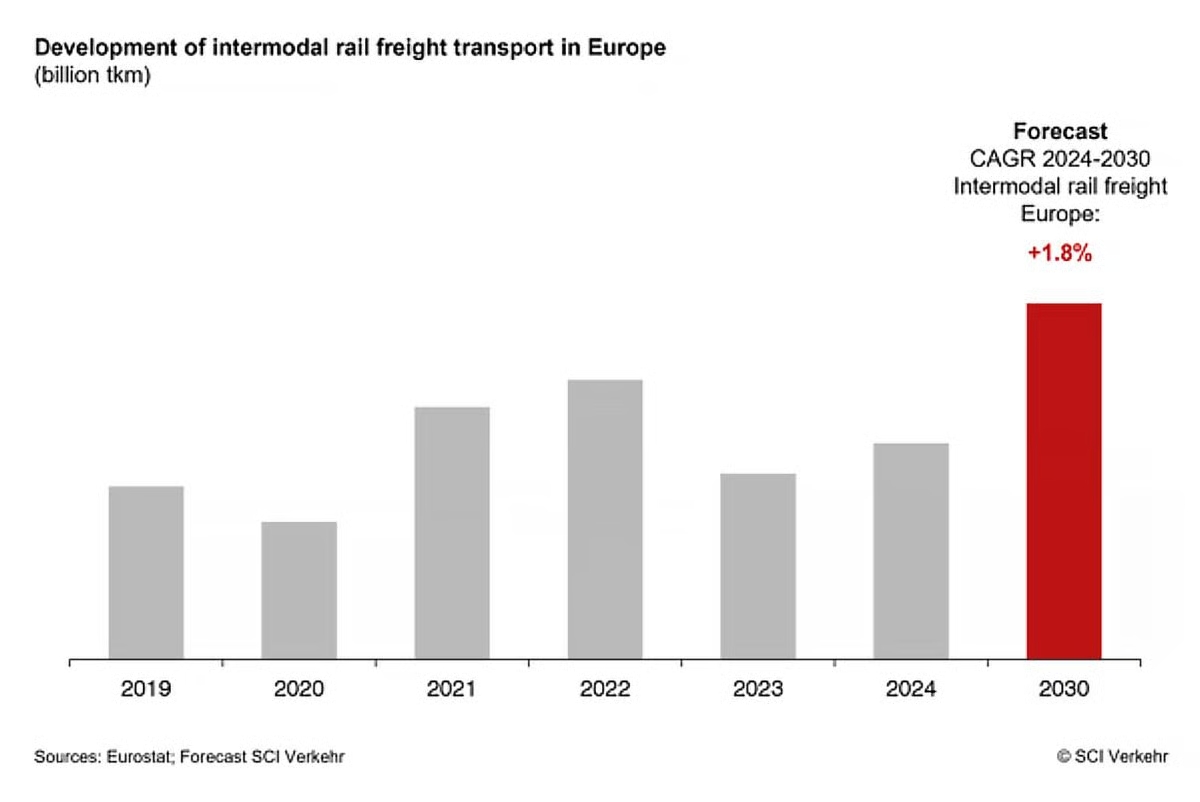
Intermodal rail freight transport in Europe is entering a new phase marked by selective growth rather than network-wide expansion. While the market has stabilised after a sharp downturn in 2023, structural constraints continue to limit a broad-based recovery.
“Intermodal rail freight transport remains a key market, but it now operates according to new rules,” says Maria Leenen, Managing Partner at SCI Verkehr. “Growth now occurs where capacity, cost control and reliable demand come together – no longer across the board.”
Rising energy costs, higher track access charges and persistent capacity bottlenecks – particularly on German and Alpine corridors – are weakening the competitiveness of traditional open-access intermodal networks compared with road transport. As a result, classic hub-and-spoke models are increasingly under pressure.
At the same time, growth is shifting geographically and structurally. Maritime hinterland traffic is benefiting from higher import volumes, changes in port calls and the growing importance of efficient rail connections to seaports. Peripheral markets such as Poland, Spain and South-Eastern Europe are also gaining relevance, supported by public subsidy programmes and new terminal investments.
Another key structural shift is the increasing role of vertical integration. Large shippers, logistics groups and port operators are taking a more active role by operating proprietary train services, dedicated routes and long-term volume commitments. These models are gradually replacing traditional open-access offerings and reshaping competitive dynamics in the European intermodal rail freight market.