

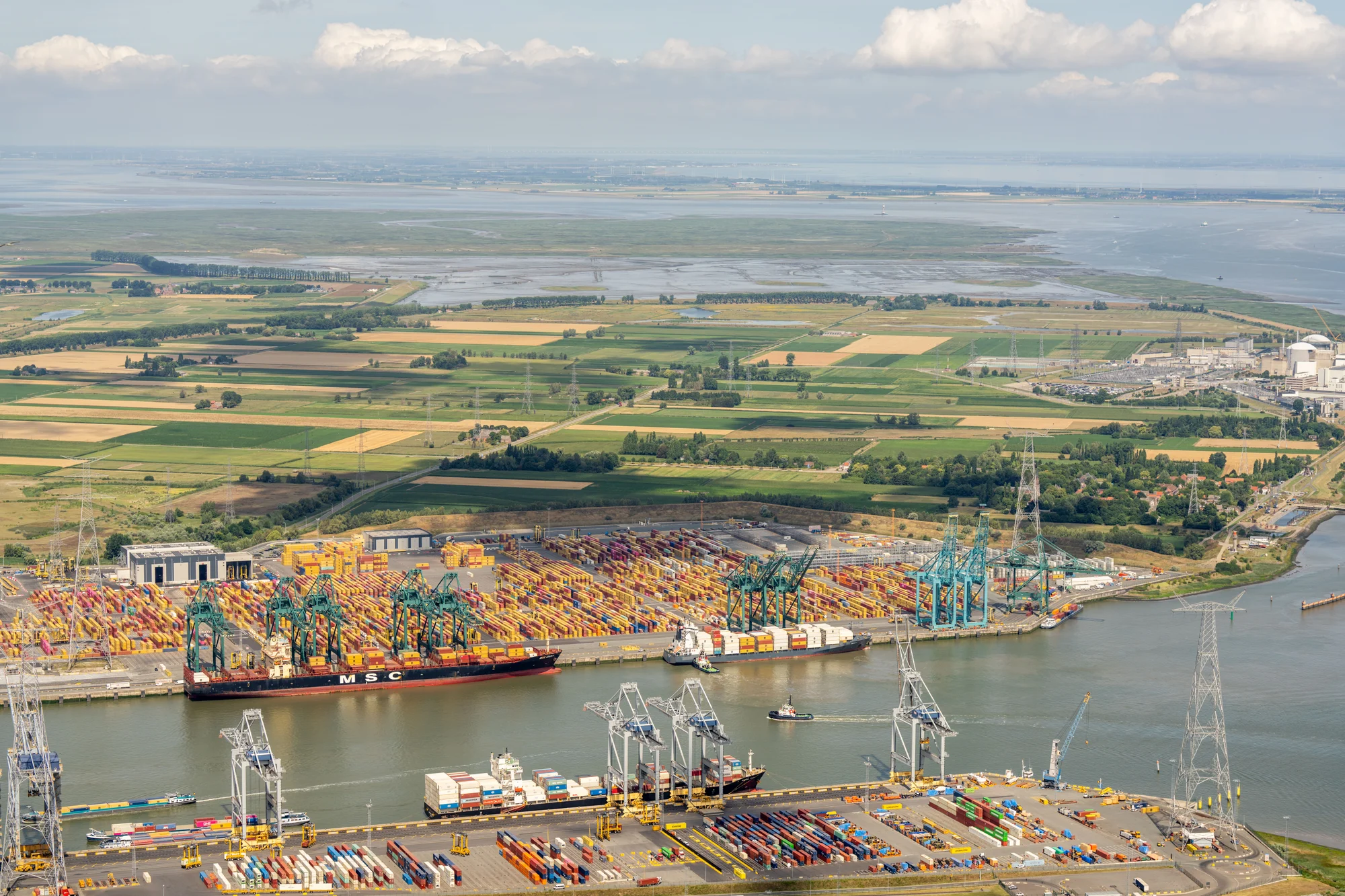
The Port of Antwerp-Bruges operated in 2025 amid geopolitical tensions, economic uncertainty, and widespread industrial action. The war in Ukraine, trade conflicts between the US, Europe, and China, congestion at container terminals, and approximately 25 days of strikes put pressure on the entire logistics chain. At the end of the year, seaborne cargo throughput amounted to 266.5 million tonnes, a 4.1% decrease from 2024, but still comparable to previous years. Losses due to strikes are estimated at 2.4 million tonnes, or approximately 1% of annual turnover.
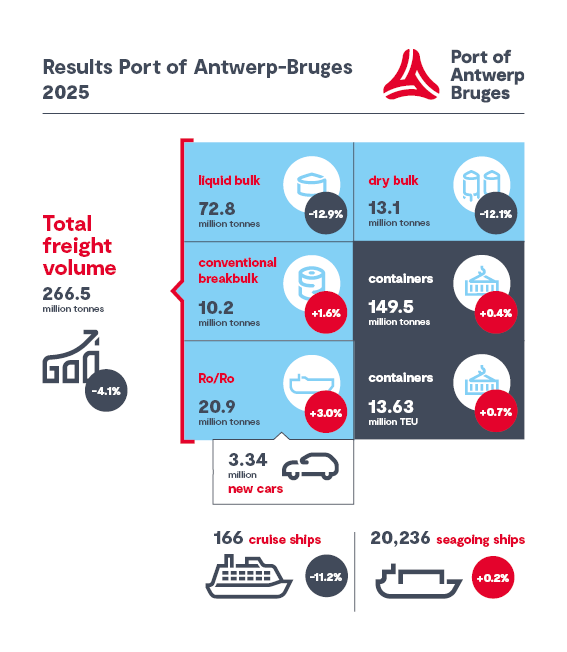
Container traffic remained virtually stable, with volumes increasing by 0.4% in tonnes and 0.7% in TEUs, confirming the Port of Antwerp-Bruges’s role as a key logistics hub and highlighting the need to expand capacity. Meanwhile, the port’s share of the Hamburg-Le Havre trade lane fell to 29.3% amid ongoing terminal congestion. The United States unexpectedly became the port’s largest trading partner, with a turnover of 31.3 million tonnes, driven by rising LNG imports, while higher US tariffs negatively impacted steel, iron, and automobile exports. At the same time, container imports from China increased by 3.8%, exacerbating the imbalance in container flows with the Far East, while in Zeebrugge, the EU ban on transshipment of Russian LNG to non-European destinations reduced energy volumes.
In 2026, the Port of Antwerp-Bruges will focus on infrastructure, security, and the energy transition as the foundation for long-term sustainable growth. With the support of the Flemish government, major projects will continue, including Extra Container Capacity Antwerp and the construction of a new gateway in Zeebrugge. The port will also strengthen investments in physical and cyber security, countering organised crime and developing transition projects – from the circular economy and low-carbon molecules to shared CO₂ infrastructure in the NextGen District – in an effort to maintain competitiveness in the face of pressure on European industry.