

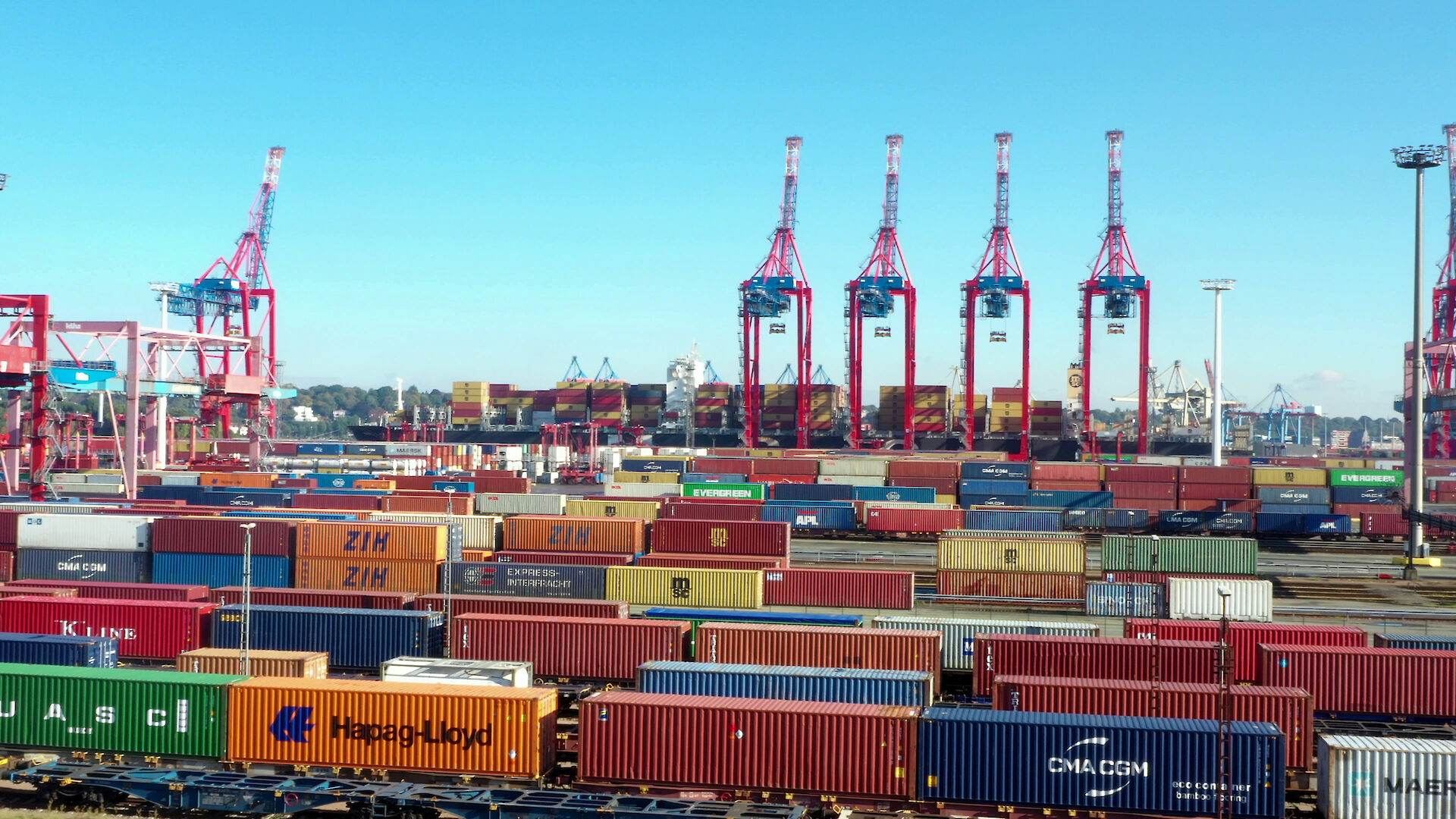
The German Federal Logistics and Mobility Office (BALM) has recently released a comprehensive analysis shedding light on the transformative trends in container transportation via water and rail in Germany. Notably, rail-based container transport in the country witnessed a remarkable surge of 85.9%, soaring from just under 4.2 million TEUs to around 7.7 million TEUs during the period spanning from 2005 to 2022. The driving force behind this growth stems from positive developments in the hinterland of the Port of Hamburg, showcasing a significant rise in the modal share of rail freight.
In tandem with this, Bremerhaven experienced a noticeable uptick in the modal share of rail freight as well, albeit with a relatively lower absolute growth in container transportation by rail. Meanwhile, container volumes on German inland waterways displayed an initial increase from approximately 2.1 million TEUs in 2005 to just under 2.6 million TEUs in 2017. However, these figures gradually declined to just under 2.0 million TEUs in 2022. The decline, commencing in 2018, was attributed to prolonged periods of low water levels on German rivers, particularly impacting navigation on the Rhine, especially in southern Germany. This, coupled with a significant rise in the cost of inland waterway transport, led to a shift towards alternative modes of transportation, posing challenges in fully offsetting volume losses in the hinterland of key seaports like Rotterdam and Antwerp, pivotal for inland container transport due to their strategic locations.