

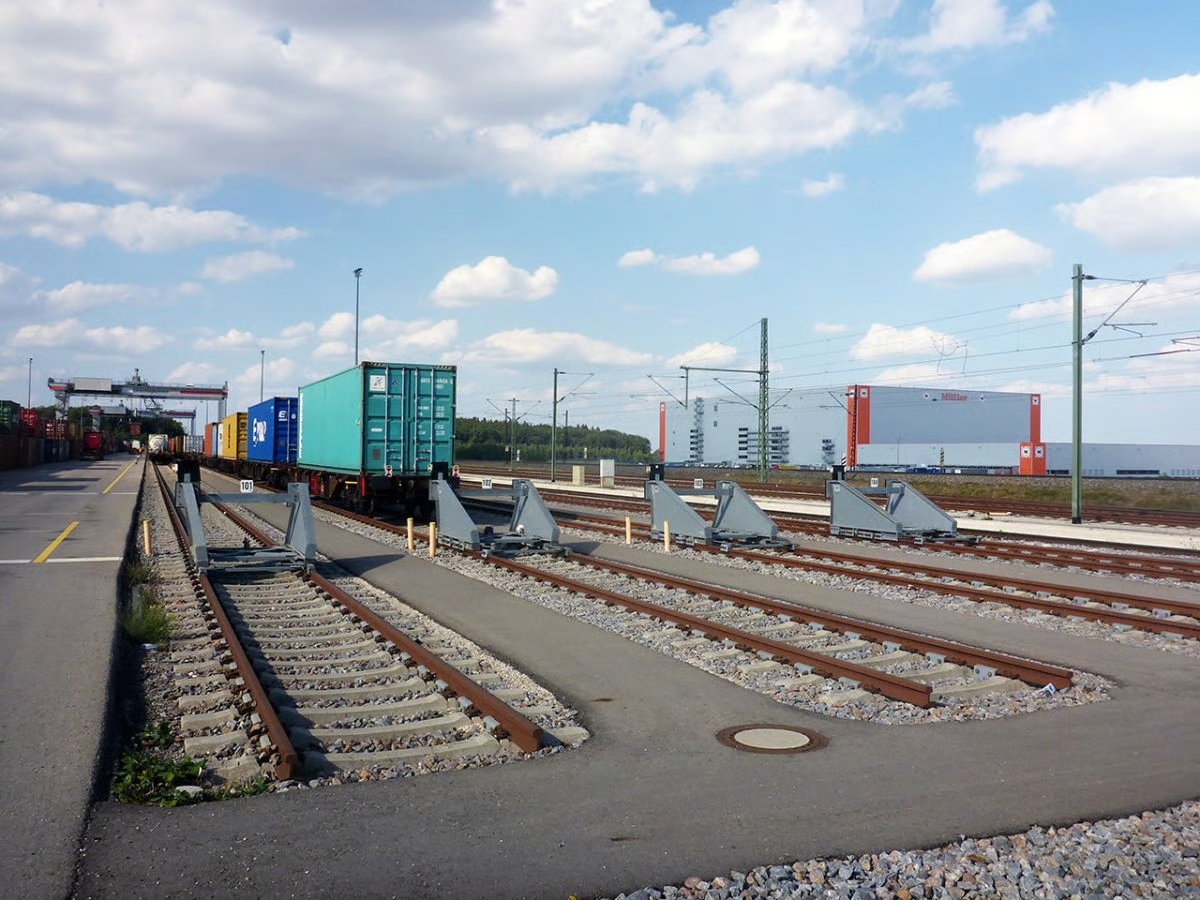
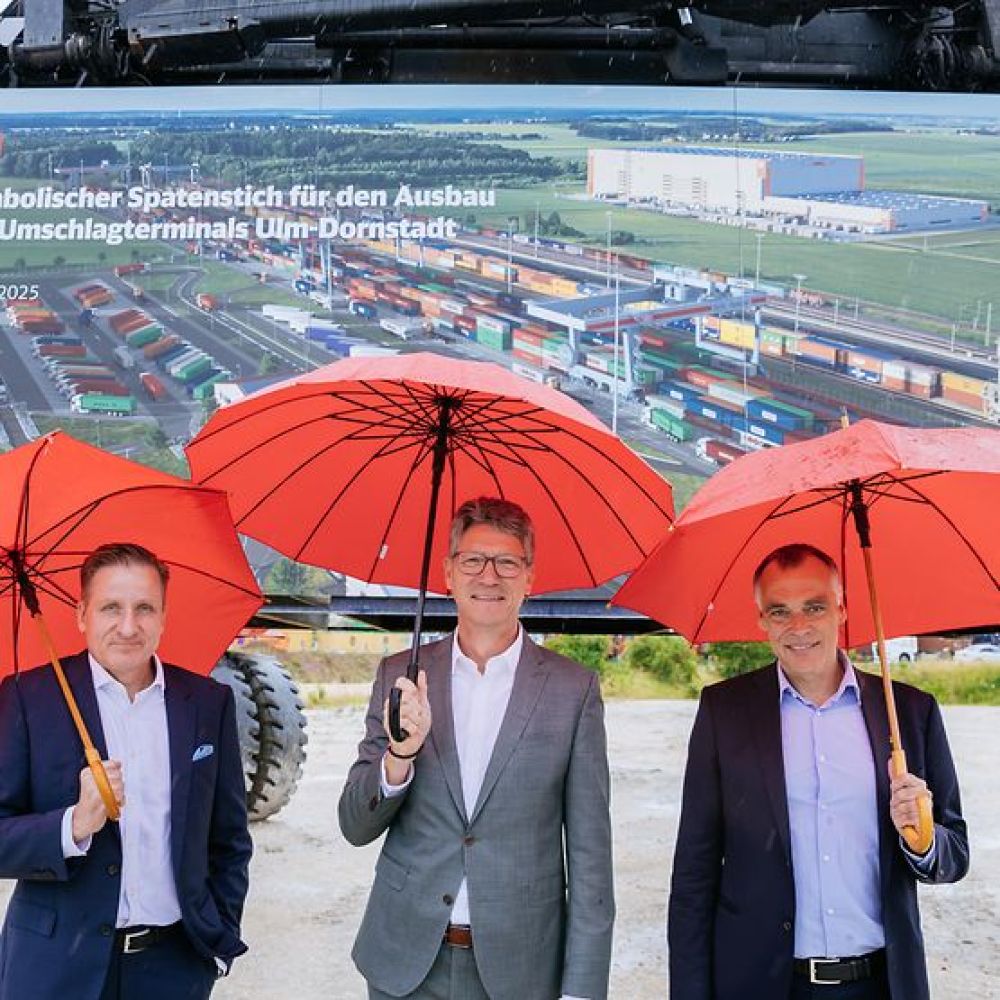
The project involves the addition of a second module, intended to more than double the terminal’s transshipment capacity by 2028. The investment is jointly funded by DB, the German federal government, and the European Union, amounting to approximately EUR 148 million (converted from the originally stated 148 million EUR investment).
How will the terminal expand
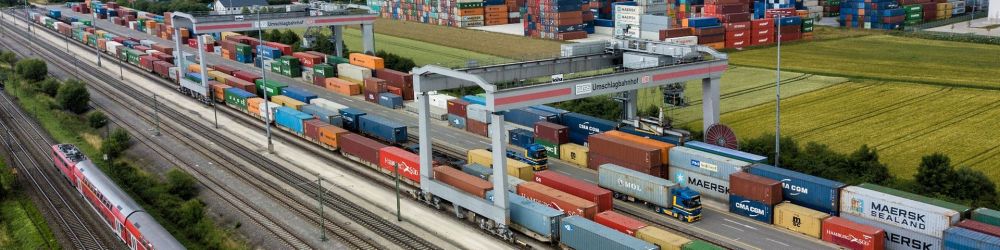
The terminal, located on a central trans-European corridor, serves as a hub connecting the Ulm economic region with northern German seaports and the Maschen transshipment hub. The planned extension is expected to increase the annual handling capacity from the current 120,000 loading units to approximately 300,000 loading units.
The facility will be equipped with four transshipment tracks, each 720 metres long and suitable for handling long freight trains. Additionally, two train formation tracks and a bypass track will be constructed. The infrastructure will support automated operations through the deployment of three automated gantry cranes out of a total of six. These cranes will be capable of unmanned operation within the new module, supported by remote control via video systems from a newly built operations and control facility.
Saving of truck trips and CO2
DB estimates that the expanded terminal will allow for a shift of 22.4 million truck kilometres to rail annually. According to internal calculations, this could lead to a reduction in diesel consumption by 6.8 million litres and a corresponding CO₂ savings of approximately 16,790 tonnes per year.
Technology and automation
The automated handling system includes video-gate entry and exit points for both road and rail, enabling digital registration of cargo units. This is expected to improve the speed and flow of loading and unloading operations. Access to the terminal will continue to use the existing roundabout connection on the roadside.
A new electronic signal control system will be established for Beimerstetten station, overseeing the entire Ulm-Dornstadt terminal area. The operational building will span two floors and house terminal management, dispatching, and control systems.
Financial structure and EU involvement
The European Union is contributing around EUR 50 million to the project through the Military Mobility Fund, which supports infrastructure projects that serve both civilian and defence-related transport requirements.
Technical overview
- Transshipment tracks: 4 tracks, each 720 metres long
- Train formation and bypass tracks: 2 formation tracks, 1 bypass
- Gantry cranes: 6 units, 3 of which will operate automatically
- Container handling lanes: 5 interim container storage tracks, 1 drive lane, 1 loading lane, and 1 return lane
- Video gate system: Installed at both module entry and exit points for digital cargo registration
- Signal control: New electronic interlocking system (ESTW) at Beimerstetten
- Operations facility: Two-storey building for terminal management and automation systems
Construction is expected to continue through 2028. The terminal will remain operational during the development of the new module.
Source: https://railmarket.com/