

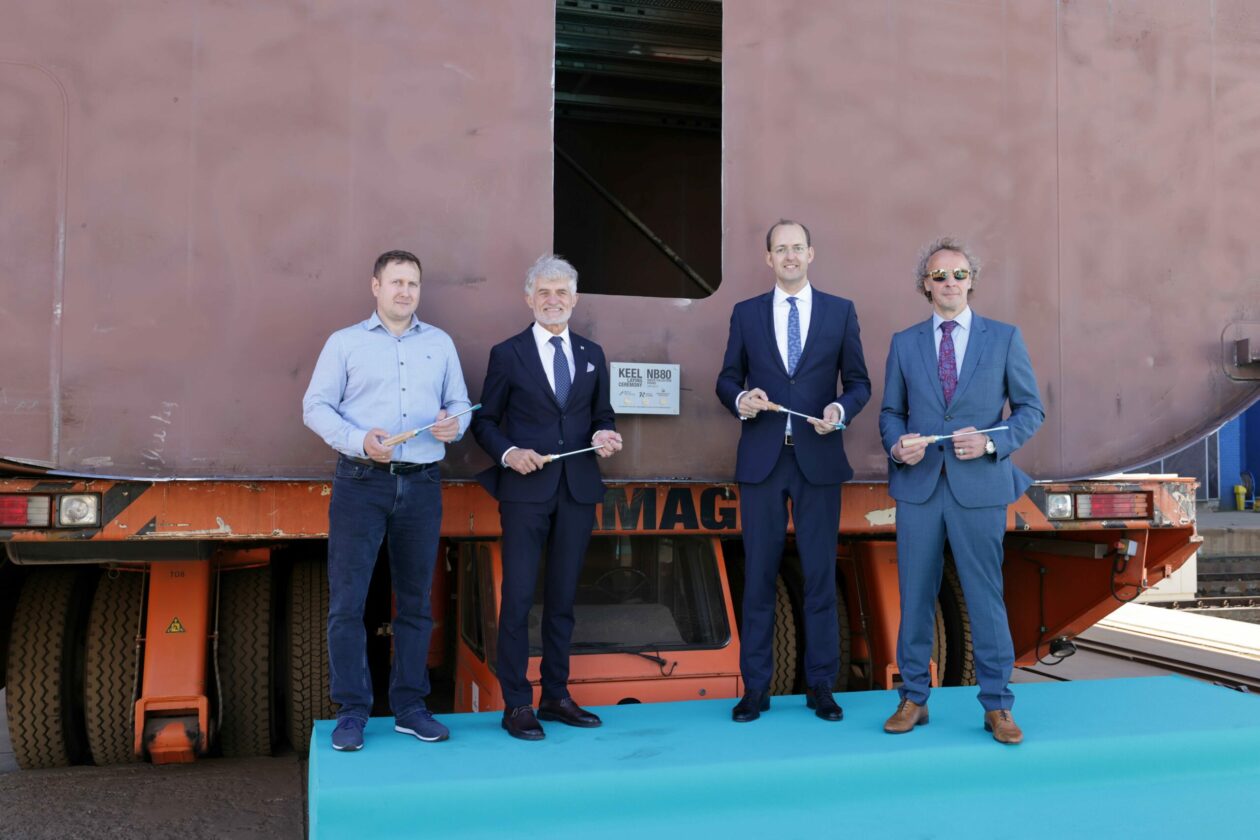
A new chapter has begun in the history of the Lithuanian shipping industry – the Western Baltija Shipbuilding (WBS) shipyard has started construction of the first hydrogen-electric ship in the country’s history. Commissioned by Klaipeda State Seaport, the ship will be used for waste management and will become a symbol of Lithuania’s progress and commitment to reducing its environmental impact. The project demonstrates the ability to attract highly qualified specialists to implement innovative projects.
According to current regulations, all ships entering or leaving the port of Klaipeda must dispose of all ship waste at the port’s reception facility. To improve the quality of waste collection services, the port administration decided to use modern and environmentally friendly technologies. Today’s symbolic keel-laying ceremony marks an important milestone in the construction of a modern waste tanker. This stage is traditionally marked by attaching a special plate, decorated with three coins, to the first block of the ship built. The plate contains the names of the parties involved in the project: Klaipeda State Seaport Administration, the Estonian company Baltic Workboats and Western Baltija Shipbuilding.
The hull, superstructure and wheelhouse will be built at the Western Baltija Shipbuilding shipyard in the port of Klaipeda, where cargo systems and other work will also be carried out. The Estonian company Baltic Workboats is responsible for the installation of main and auxiliary machinery, as well as testing of all ship systems. The main challenge for shipbuilders is to create a vessel for collecting oily bilge water, sewage and other waste, equipped with a system for treating and transferring the wastewater to a shore installation. The 42-meter and 10-meter tanker will be able to collect up to 400 cubic meters of liquid waste and will be equipped with two electric motors powered by 2,000 kWh batteries and a hydrogen fuel system. The €12 million project is due to be completed by the end of next year.