

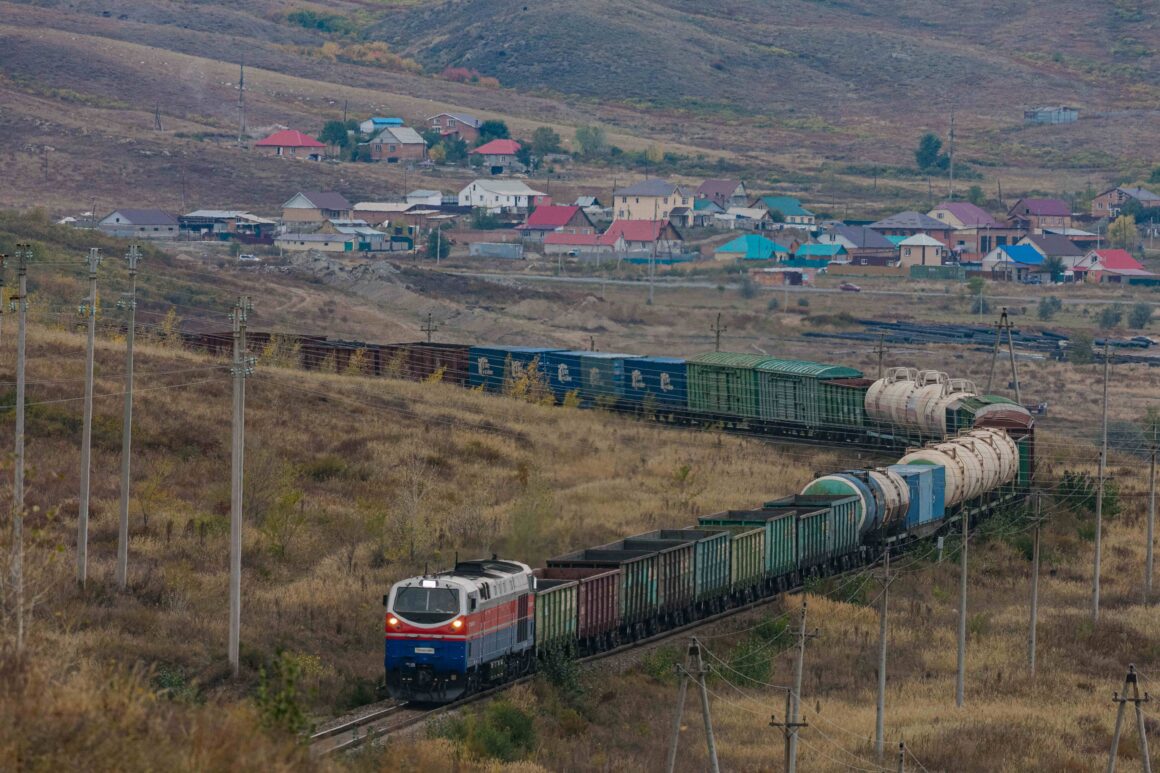
In recent years, the railway system of East Kazakhstan has undergone a major transformation, becoming faster, more technologically advanced, and better integrated into the national network. Just two decades ago, the region was effectively a “railway peninsula”: trains traveling to the country’s central regions had to pass through Russian territory and the Lokot station, resulting in longer delivery times and higher costs due to customs and border procedures. The situation changed with the 2009 commissioning of the Shar–Novo-Ust-Kamenogorsk line, built using modern technologies such as the ABTC-M automatic block signaling system, the Dialog microprocessor interlocking system, and fiber-optic communication lines. Implemented as a public-private partnership, this project created a strategic corridor that directly linked Ust-Kamenogorsk to the country’s main network, streamlining industrial logistics and accelerating passenger travel to Astana and Almaty.
Further modernization has encompassed both infrastructure and working conditions. Construction of a transport and logistics complex is underway at Ulan station; backed by investor Dosjan Temir Joly, the facility will cover 18 hectares and have a design capacity of 895,000 tons per year. Track infrastructure is being upgraded in parallel: since 2021, intermediate repairs have been carried out on sections involving 53.7 km of reinforced concrete sleepers, and switches have been installed across 87 km of track, with further work planned for 2026. Significant changes have also occurred in communications; the shift to fiber-optic lines and the implementation of the digital HIMATRIX system at 22 regional stations have enhanced infrastructure reliability and resilience against weather conditions.
The operational logic of the industry itself is also evolving – from freight logistics to locomotive fleet management. Since 2016, the share of containerized exports has grown by 10%, with an expansion of multimodal routes and access to new markets – including China, the Middle East, and the South Caucasus – thereby boosting the region’s export potential. The locomotive depot’s fleet has been completely modernized; state-of-the-art TE33A and TE33AS diesel locomotives have replaced outdated models, extending maintenance intervals to 120 days and reducing operating costs. The implementation of digital control systems, electronic routing, and automated medical check-ups completes the sector’s transition to a high-tech model, making the Eastern Kazakhstan railway safer, more efficient, and more people-oriented.