

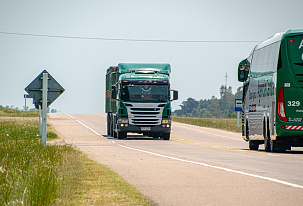
The European road freight sector is gradually recovering from the 2023 recession, but the recovery remains weak and uneven, according to ING analysis. While demand for freight began to grow in 2025, total tonne-kilometer volumes remain on average 1.5% below pre-crisis peaks. The bank forecasts that demand for road freight in Europe will increase by approximately 1% in 2026, with significant variation across countries, segments, and fleet structures.
ING notes that protectionist trade policies, geopolitical instability, and their impact on supply chains and consumer confidence remain key uncertainty factors. Industrial freight transportation remains the weakest market segment: energy-intensive industries, including metallurgy and chemicals, are facing competitiveness challenges, leading to production cuts and plant closures. Germany, which accounts for more than a quarter of all road transport activity in Europe, continues to restrain overall growth, while Spain and Poland are showing more resilient performance amid stronger economic indicators.
Following a sharp decline in demand, carriers reduced capacity, and by the end of 2025, the European road transport market capacity index was almost 1% below its year-ago level due to fleet reductions, bankruptcies, and the retirement of older trucks. Despite some recovery in tariffs, profitability remains under pressure, and rising wages and road tolls, particularly in the Netherlands and Belgium, will be difficult to fully pass on to customers in 2026. ING also expects continued market consolidation as smaller companies face increasing investment demands in the areas of digitalization, sustainability, and regulatory compliance.