

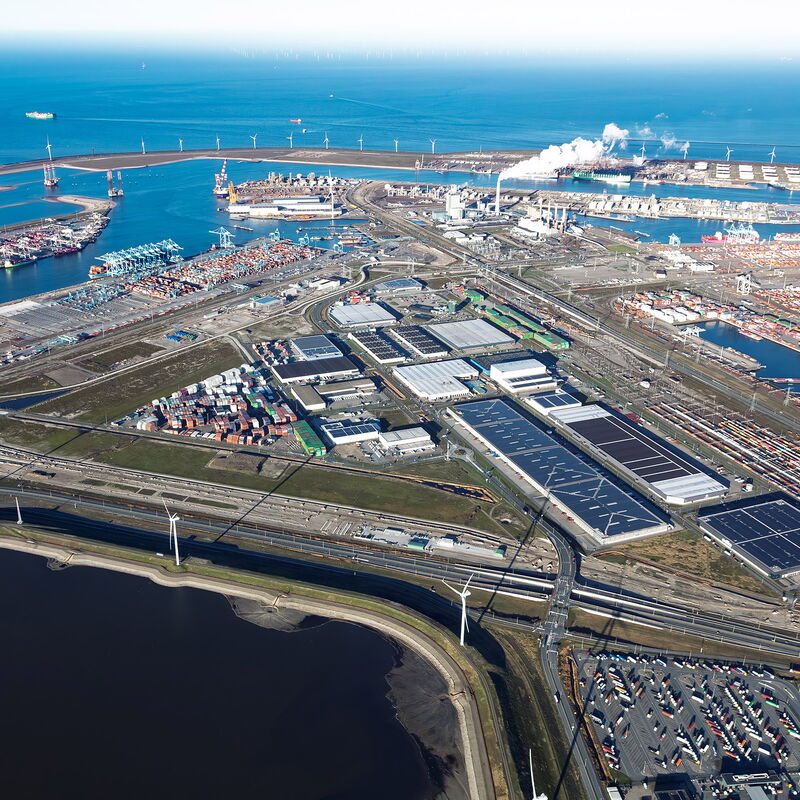
The Port of Rotterdam Authority summarized its year-end results, noting signs of recovery across all segments in the second half of the year, despite significant pressure on chemical and logistics companies. Over the past 12 months, several chemical companies announced production closures in Rotterdam, and investments in new and ongoing projects, primarily in the renewable fuels sector, were suspended. The company assessed that the Dutch government’s measures adopted in 2025 were positive but insufficient to level the competitive playing field with the rest of Europe, while competition from China remains strong. Against this backdrop, the port authority’s financial results remained stable, with investment volume amounting to €291.4 million.
The port continues its commitment to sustainable development, although achieving the target of reducing CO₂ emissions by 55% by 2030 is becoming increasingly unlikely. In 2025, major projects began and advanced: Air Liquide began construction of a 200 MW green hydrogen production plant, scheduled for commissioning by the end of 2027. This will be the second electrolyzer on the Maasvlakte, following Shell Holland’s Hydrogen I project, scheduled for commissioning in 2026. The Porthos carbon capture and storage project has entered its final stages, with the 20-kilometer offshore pipeline completed, and commissioning expected in 2026. Meanwhile, a 32-kilometer hydrogen network, connecting industrial regions in the Netherlands, Germany, and Belgium, is nearing completion. At the end of 2025, the Port Vision 2050 strategy, jointly presented with the City of Rotterdam, envisions transforming the port into Europe’s most competitive and sustainable hub.
Amid heightened geopolitical tensions, the port is strengthening its security and resilience measures. As part of the national defense space program, a 15-hectare site has been reserved on the Maasvlakte for a terminal for defense logistics, and the possibility of hosting amphibious exercises is also being considered. The authority is investing in cybersecurity and drone detection technologies in preparation for the transition to a fully regulated U-Space airspace from 2026. Port of Rotterdam Authority revenue increased by 6.6% to €940.4 million, EBITDA increased to €583.6 million, while net profit decreased to €266 million due to increased depreciation and a one-time write-off of assets. Dividend payments in 2025 will amount to €186.2 million, or 70% of net profit, and their amount will depend on the company’s investment plans and financial position.