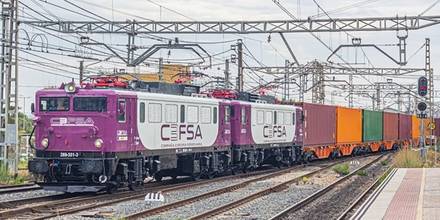

Stadler: 17 Co’Co’ electric locomotives for LTG Cargo.
Stadler’s first locomotive order for the Lithuanian market includes an option for 17 additional units, spare parts and a 3-year maintenance period.

Stadler’s first locomotive order for the Lithuanian market includes an option for 17 additional units, spare parts and a 3-year maintenance period.
OOCL has announced the launch of a new route, China Laem Chabang Service (CHL2), which will commence operations from 10 January 2025. The new service will provide a more efficient connection between Eastern and Southern China and Thailand, offering competitive transit times and service reliability. This addition to the existing CHL services aims to meet the growing trade needs between these regions.
A strategic session was held in Astana with the participation of the management of JSC NC KTZ, Global DTC Pte. Ltd. (Singapore) and Huawei Technologies Co., Ltd. (China), where the Single Digital Window (SDI) project was presented. This tool is aimed at the complete digitalization of customer service in the field of freight transportation, combining the commercial functions of KTZ subsidiaries into a single digital ecosystem.
The construction of the state-of-the-art Antwerp Coordination Centre (ACC), which will be the key point for managing port operations, has officially started in the Zandvliet-Berendrecht lock area. The facility is scheduled to open by the end of 2026. The eight-storey, 8,000 m², 46-metre-high building will replace the outdated centre from the 1970s. It will house teams of pilots, lock operators and other specialists, ensuring the coordination of the 274,000 shipping operations registered at the port in 2023.
The cargo turnover of the Mangystau freight transportation department for 11 months of 2024 increased by 1.3% compared to the same period last year, reaching 6.9 billion ton-kilometers. One of the key achievements was the development of new export routes: for the first time, shipment of ammonium nitrate began through the ports of Aktau and Kuryk along the Trans-Caspian International Transport Route (TITR). This route passes through the Azerbaijani port of Govsan and the Georgian port of Batumi, with plans to ship 50 thousand tons of the product to consumers around the world.
Cargo handling volumes at Latvia’s three largest ports decreased by 7.2% in January-November 2024 compared to the same period last year, amounting to 32.79 million tonnes. This is evidenced by data from the Latvian Ministry of Transport. In the overall transshipment structure, bulk cargo amounted to 15.63 million tonnes (-17.7%), general cargo – 12.59 million tonnes (+5.4%), and liquid cargo – 4.56 million tonnes (+5.3%).
A delegation of Azerbaijan Railways (ADY) headed by Chairman Rovshan Rustamov visited Iran to assess the state of the railway infrastructure in Julfa. One of the key issues was the construction of a railway bridge across the Araz River, which will connect Nakhchivan with the mainland of Azerbaijan via Iran. In addition, ADY representatives got acquainted with the work of the wheel pair replacement workshop in Julfa.
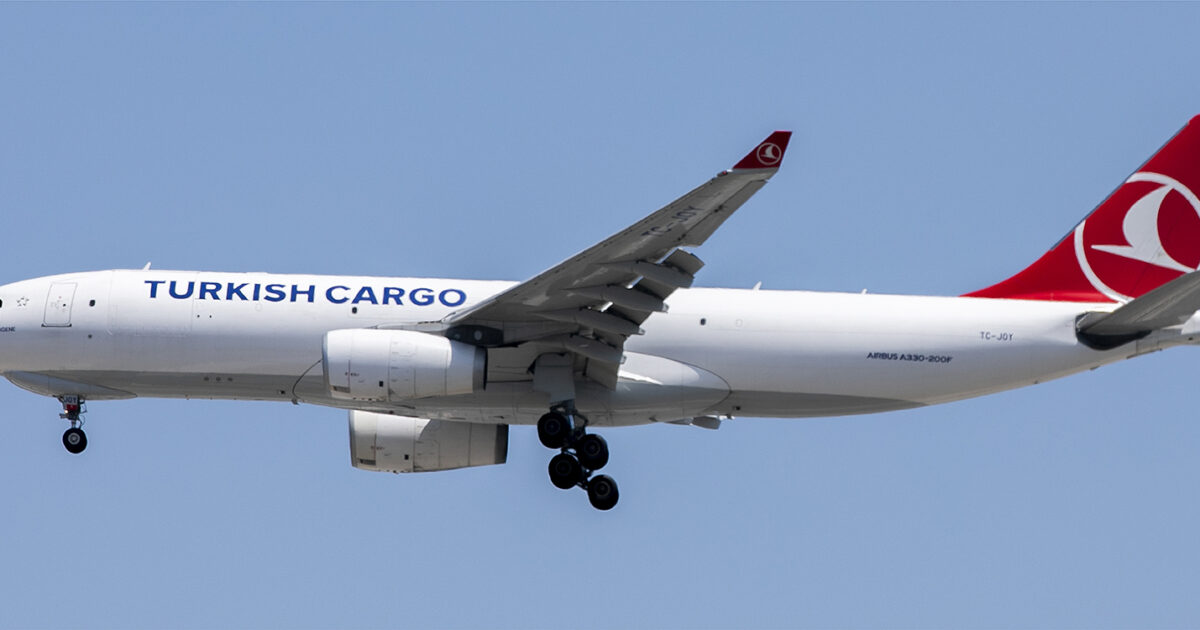
German company Elbe Flugzeugwerke (EFW), which specializes in the conversion of Airbus passenger aircraft into freighters, celebrated an important milestone: the completion of the 100th freighter conversion in its history. The jubilee aircraft, an Airbus A330P2F, was delivered to a customer in Asia, just like the first aircraft of this model in 2017. Over the seven years of work, the joint project of EFW, Airbus and ST Engineering has added 49 Airbus A330P2F, 47 A321P2F and 4 A320P2F to the global freighter fleet.
Ocean Network Express (ONE) has announced an upgrade to its BBX (Baltic Bridge Express) service, which will now cover more ports and provide customers with even more reliable logistics solutions. The new route includes: Rotterdam ➔ Klaipeda ➔ Riga ➔ Tallinn ➔ Kotka ➔ Rotterdam.
The volume of cargo transportation along the Trans-Caspian International Transport Route (TITR) in January-November 2024 increased by 63%, reaching 4.1 million tons. Container transportation increased by 2.6 times and amounted to 50.5 thousand TEU. This became possible due to the increase in the route’s capacity to 6 million tons per year, including up to 100 thousand TEU containers.