

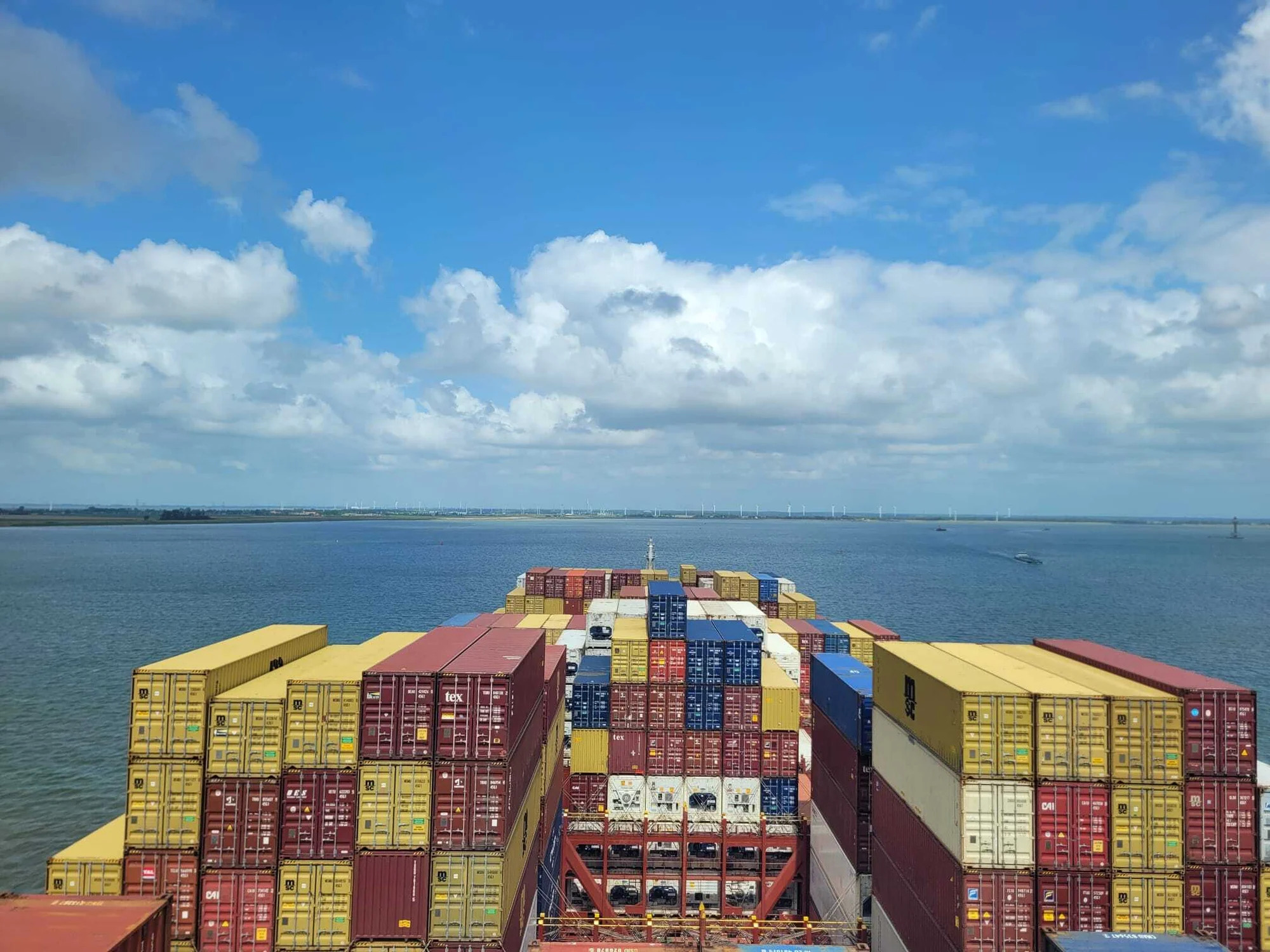
In the first nine months of 2025, the Port of Antwerp-Bruges handled 202.6 million tonnes of seaborne cargo, a 3.8% decrease compared to the same period last year. Dry and liquid bulk cargo accounted for the main decline (-12.8%), while total cargo throughput, including containers, RoRo, and general cargo, increased by 1.3%. After a robust first half of the year, container volumes began to decline in August due to the end of the transition period for old shipping alliances. Nevertheless, container traffic demonstrated moderate growth over the first nine months: tonnage increased by 1.1%, and TEU by 1.6%.
The port’s share of the Hamburg-Le Havre range decreased by 0.7 percentage points to 29.8% in the first half of the year, primarily due to a lack of terminal capacity. This issue is planned to be addressed through the ECA (Extra Container Capacity Antwerp) project. At the same time, the industry is under pressure from unreliable shipping schedules and a series of strikes. Amid weak steel exports to the US and Mexico, the general cargo segment was supported by a recovery in steel imports, while liquid bulk volumes fell by 13.5% due to lower petroleum product exports to West Africa and the crisis in the EU chemical industry.
Dry bulk volumes decreased by 8.9%, primarily due to lower fertilizer shipments, while RoRo volumes grew by 3.3%, driven by increased automobile imports from China, which has become the largest supplier of new vehicles. Trade with the US—the port’s second-largest partner—grew by 15%, primarily due to containers and liquid bulk. However, exports have been declining since the summer due to US import duties, particularly in the metals sector. Despite these fluctuations, the port remains a key gateway for alternative energy flows replacing Russian gas.