

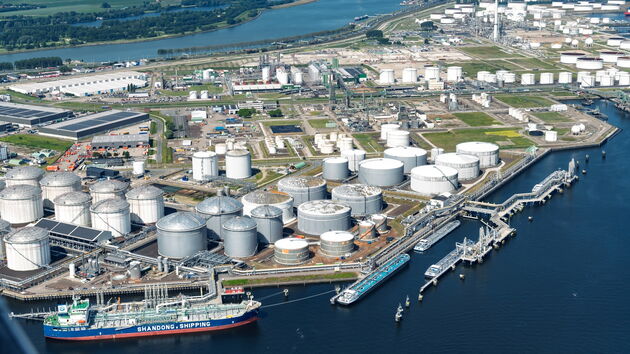
In the first half of 2025, the Port of Rotterdam showed stable financial results against the backdrop of a 4.1% decline in total cargo throughput. At the same time, container throughput in TEU increased by 2.7%, despite a 1% decline in tonnage due to an increase in the share of empty export containers. Port charges increased by 5.4%, and EBITDA reached €295 million (+1.1%). Investments decreased by 17% to €136.1 million, mainly due to project delays and the absence of last year’s purchase of nitrogen emission rights. Nevertheless, the Port of Rotterdam Authority continues to actively support sustainable development, including through the CCS Porthos project and the launch of shore power for cruise ships.
The dry and liquid cargo segment shows mixed dynamics. Dry bulk volumes fell by 8.9% due to a decline in coal and scrap metal shipments, but agricultural imports increased. Liquid bulk volumes fell by 5.3%, driven by a decline in mineral products and biofuels. At the same time, crude oil (+2.6%) and LNG (+9.0%) shipments increased. Container volumes grew due to increased imports from Asia and North America, but high terminal utilisation and changes in shipping alliances caused delays on the land side. The Port of Rotterdam Authority is actively engaged in dialogue with logistics chain participants to improve efficiency, including the introduction of digital platforms and optimisation of land transport schedules.
Despite the economic turbulence, the port continues to implement major infrastructure and social projects. In March, the Portlantis interactive centre opened, which has since been visited by 25,000 people. The Port of Rotterdam Authority also supports educational initiatives for young people in Rotterdam South. In the area of security, cooperation with government agencies and defence logistics has been strengthened, and digital security is being strengthened through the national FERM platform. For the first time, a Dutch port is actively implementing a digital airspace management system due to the growing use of drones.
Amid heightened competition for investment in Europe, the Port of Rotterdam Authority is concerned that the Netherlands is lagging behind in creating a favourable environment for industry. The closure of chemical plants and delays in sustainable projects point to risks to strategic autonomy. Despite recent government steps, including the abolition of the plastic tax and a review of subsidies for green hydrogen, problems with nitrogen emissions, grid congestion and high tariffs continue to hold back investment. The port authority calls for coherent EU and Dutch policies to maintain the competitiveness of industry and a sustainable future for Europe’s largest maritime hub.