

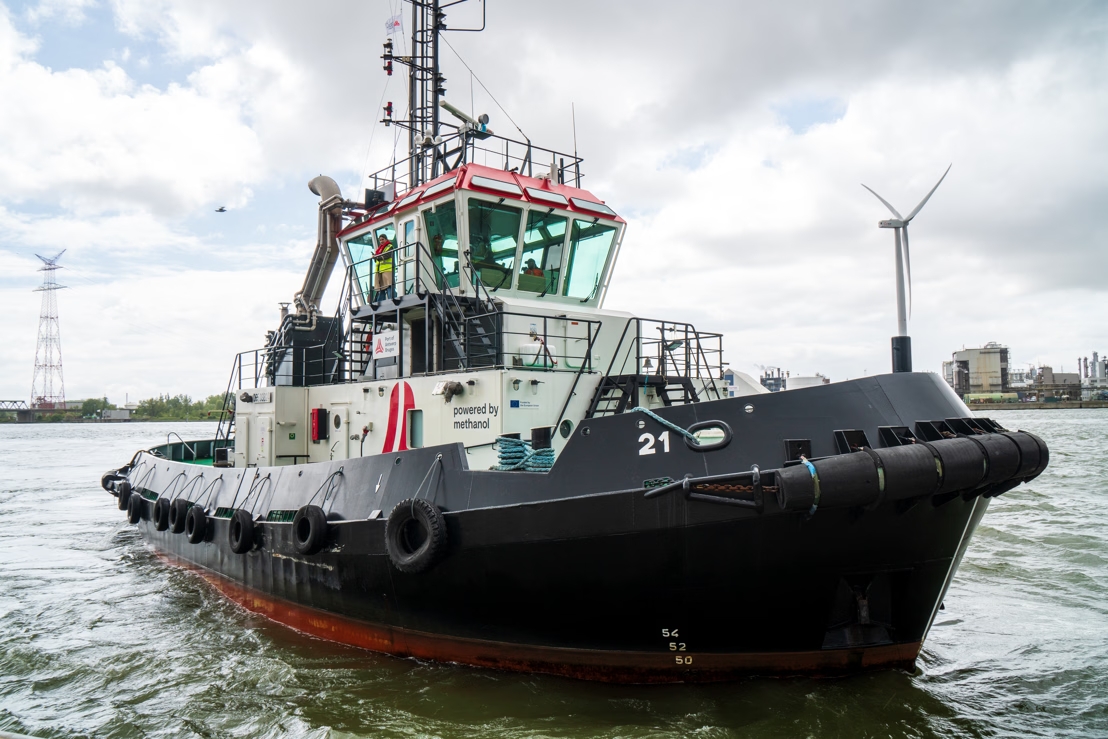
The Port of Antwerp-Bruges introduced a groundbreaking innovation: the Methatug, a tugboat powered by methanol, heralding a significant step forward in the port’s quest to achieve climate neutrality by 2050. The Methatug, financed through the European research program Horizon 2020 and a flagship project within the FASTWATER initiative, exemplifies the port’s dedication to exploring sustainable fuel alternatives for the shipping sector.
Methanol emerges as a promising candidate for future fuels, offering reduced emissions and the potential for production from renewable sources. As the world’s first methanol-powered tugboat, the Methatug represents a tangible manifestation of this potential. Its engines, converted into ‘dual fuel’ configurations, enable it to operate on a combination of methanol and conventional fuel. This versatility positions methanol as a viable solution for both new vessels and retrofitting existing ones, given its liquid state under ambient conditions.
The Methatug’s specifications underscore its capabilities: with a width of 11 meters, length of 29.5 meters, and a weight of 584 tons, it boasts a bollard pull of 50 tons, ensuring robust performance in maritime operations. Additionally, its storage capacity of 12,000 liters of methanol provides ample fuel for extended periods of tug work. Beyond its technical attributes, the Methatug project embodies collaborative efforts within the FASTWATER consortium, involving partners such as ScandiNAOS, Anglo Belgian Corporation, Heinzmann, Ghent University, and Methanex.
Furthermore, the Methatug initiative aligns with the Port of Antwerp-Bruges’ broader greening program, aimed at integrating environmentally friendly technologies across its fleet. From the hydrogen-powered Hydrotug 1 to energy-efficient RSD tugboats, the port is systematically adopting sustainable solutions. This approach underscores its position as a leader in maritime sustainability and sets a precedent for other ports globally. As the fifth-largest bunker port worldwide, the Port of Antwerp-Bruges is poised to become a multi-fuel hub, offering a range of low-carbon options, including methanol, hydrogen, and electricity, signaling a transformative shift towards cleaner energy in maritime transportation.