

LTG Infra, an infrastructure company within the LTG Group responsible for the Rail Baltica project in Lithuania, has announced an open international tender for the design of the railway section from Panevėžys to the Lithuanian-Latvian border. This section is approximately 54 kilometers long. The company emphasized that the selection of a designer is expected to be completed soon, with design work scheduled to begin next year.
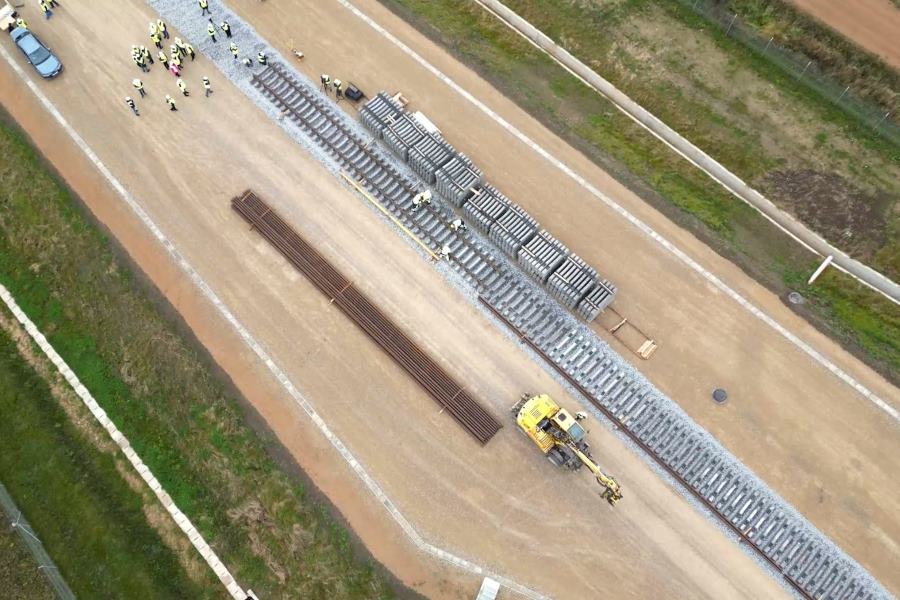
The Rail Baltica project in Lithuania is developing along the entire main route. In 2025, LTG Infra signed contracts for the construction of the 114-kilometer section from Kaunas to Panevėžys, where preparatory and construction work is already underway, including the laying of the superstructure on the most complete 9-kilometer section. Concurrently, design work continues on the section from the Lithuanian-Polish border to Kaunas, which will modernize nearly 100 kilometers of the railway line. As Lithuanian Deputy Minister of Transport and Communications Roderikas Žiobakas noted, the standard gauge line from Panevėžys to the Latvian border is crucial for strengthening transport links in the region, integrating with Western Europe, and enhancing strategic resilience.
According to LTG Group CEO Egidijus Lazauskas, the section from Panevėžys to the Latvian border is the final link necessary to ensure uninterrupted international traffic along the Poland-Latvia corridor. At the same time, LTG Infra is holding tenders for the design of infrastructure maintenance depots in Panevėžys and Kaunas, as well as regional stations in Jonava and Gustonys. Additional procurement for the design of individual facilities is planned for next year. Rail Baltica remains the largest rail infrastructure project in the history of the Baltic states and a strategic EU project, envisioning the creation of an electrified standard gauge line that will connect Lithuania, Latvia, and Estonia with Central and Western Europe.