

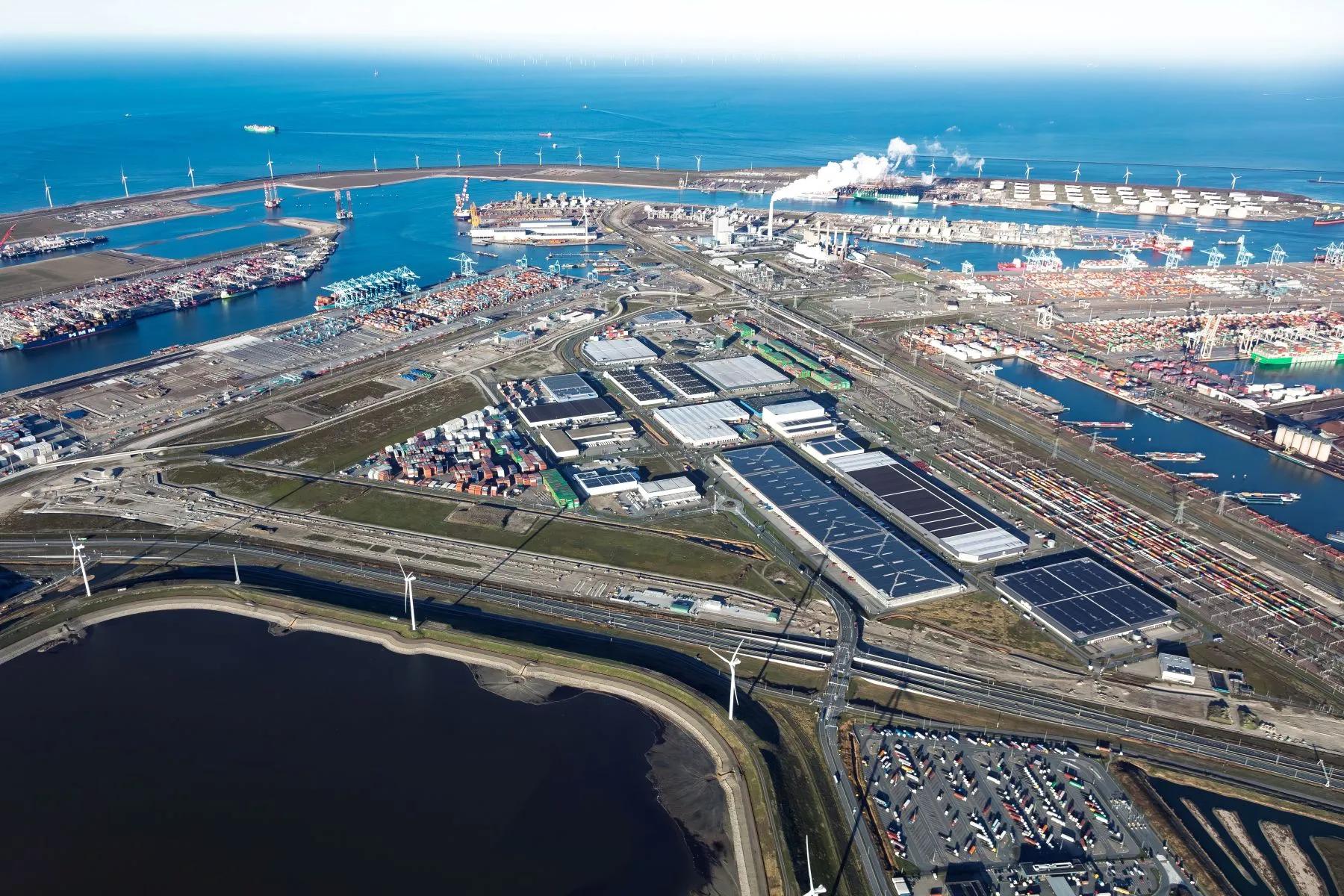
Europe’s largest seaports ended 2025 with mixed cargo throughput trends: growth in container traffic was accompanied by a decline in bulk cargo volumes. The Port of Rotterdam handled 428.4 million tonnes (-1.7%), while Antwerp-Bruges handled 266.5 million tonnes (-4.1%), while the Port of Hamburg increased its throughput to 114.6 million tonnes (+2.6%). The Port of Koper in Slovenia maintained a stable level of approximately 23 million tonnes. The container segment was the main driver of growth at individual ports, despite global trade volatility, tariff restrictions, and changes in the energy market.
The most significant growth in container traffic was recorded in Hamburg and Koper. Hamburg handled 8.3 million TEUs (+7.3%), with container throughput in tonnage increasing by 4.6%. The increase was driven by shipments to Asian markets, particularly China (+6.5%), India (+49.2%), and Malaysia (+84.3%), while container traffic from the United States decreased by 25.6% due to stricter customs measures. The Port of Koper set a record, handling 1.27 million TEUs (+12%), and also increased car throughput to 914,800 units (+3%), primarily due to imports of Chinese-made cars. The port’s financial performance also improved: revenue reached €380.3 million (+15%), operating profit €96.3 million (+44%), and net profit €81.5 million (+35%).
At Rotterdam and Antwerp-Bruges, the decline in overall cargo throughput was primarily due to a decline in bulk and liquid cargo volumes. In Rotterdam, dry bulk volumes decreased by 6.5% and liquid bulk volumes by 1.5%, although container throughput increased to 14.25 million TEU (+3.1%). In Antwerp-Bruges, container throughput reached 13.6 million TEU (+0.7%), but the overall figure declined due to a 12.8% drop in bulk cargo. Meanwhile, the United States became the port’s largest trading partner, with a volume of 31.3 million tonnes. Tariff policy changes and disruptions to port operations, including adverse weather conditions and strikes, significantly impacted cargo flow dynamics. At the same time, the ports are recording changes in the structure of energy cargo: LNG transshipment is growing, while petroleum product volumes continue to decline.