

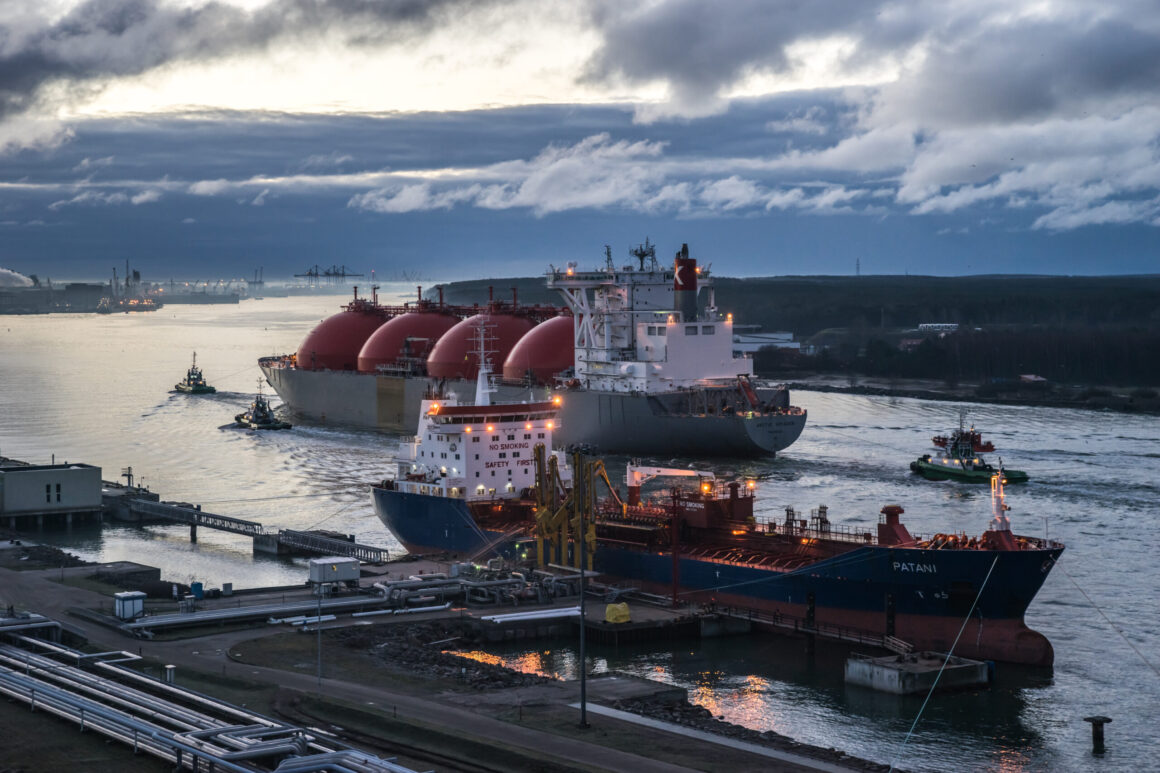
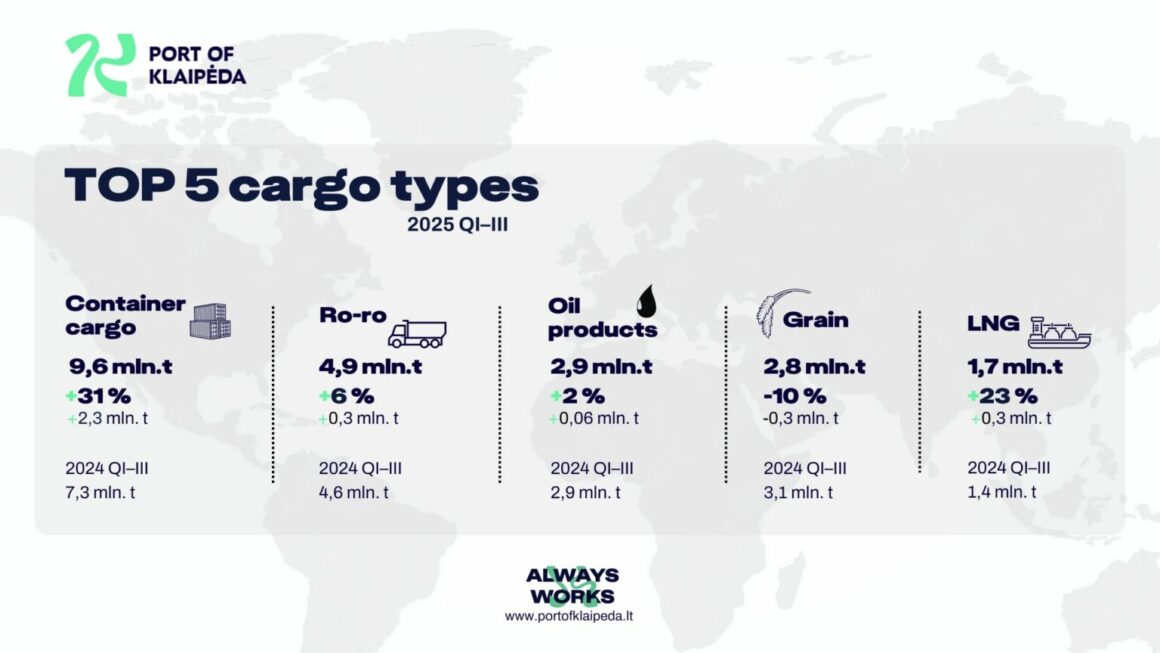
Грузооборот Клайпедского порта за первые девять месяцев года увеличился на 111 тонн, достигнув 28,7 млн тонн, что стало лучшим показателем сентября года. Росту способствовали контейнерные грузы (+311 тонн, до 9,6 млн тонн), ролкерные грузы (+61 тонна, почти 5 млн тонн), а также значительный рост объёмов перевалки сжиженного природного газа (СПГ) и строительных материалов – оба на 231 тонну благодаря работе FSRU Independence и активным проектам в сфере автомобильного и железнодорожного транспорта в Литве.
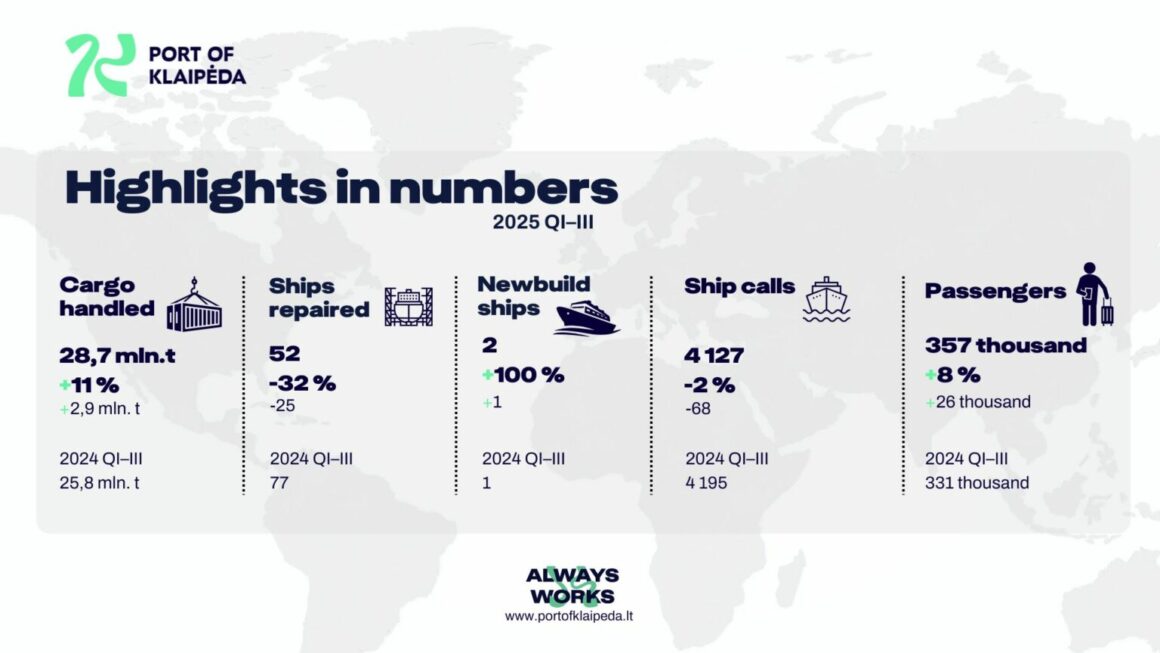
According to the port administration, this positive trend reflects economic stability, the agricultural season, and the country’s growing energy independence. At the same time, some segments experienced declines: scrap metal handling fell by 18%, timber by 16%, and fertilizer by 13% due to the suspension of transit from Russia and Belarus. Grain handling decreased by 10% following fluctuations in crop yields and domestic demand. Nevertheless, passenger traffic grew by 8%, including a 12% increase in cruise tourists; 52 ships were repaired and two new ones were built at the port’s shipyards.
Despite a decline in certain cargo categories, Klaipėda retained its status as the largest port in the Baltic, holding a 41% share of the regional market. By comparison, Riga holds 17.5%, Tallinn 14.6%, Ventspils just over 9%, and Liepaja over 7%.