
Gruzin Geo

Blog

  • By sotter sotter
  • January 22, 2026

In 2025, Ukrainian seaports handled more than 82 million tons of cargo.

By the end of 2025, Ukrainian seaports had fulfilled over 95% of their cargo transshipment plan, handling 82.2 million tons. This was announced by Oleksiy Kuleba, Deputy Prime Minister for Reconstruction of Ukraine and Minister of Communities and Territories Development, who emphasized the port industry’s resilience amid the ongoing war.

  • By sotter sotter
  • January 22, 2026

Over 16 million tons of cargo were transported through the Altynkol-Khorgos crossing in 2025.

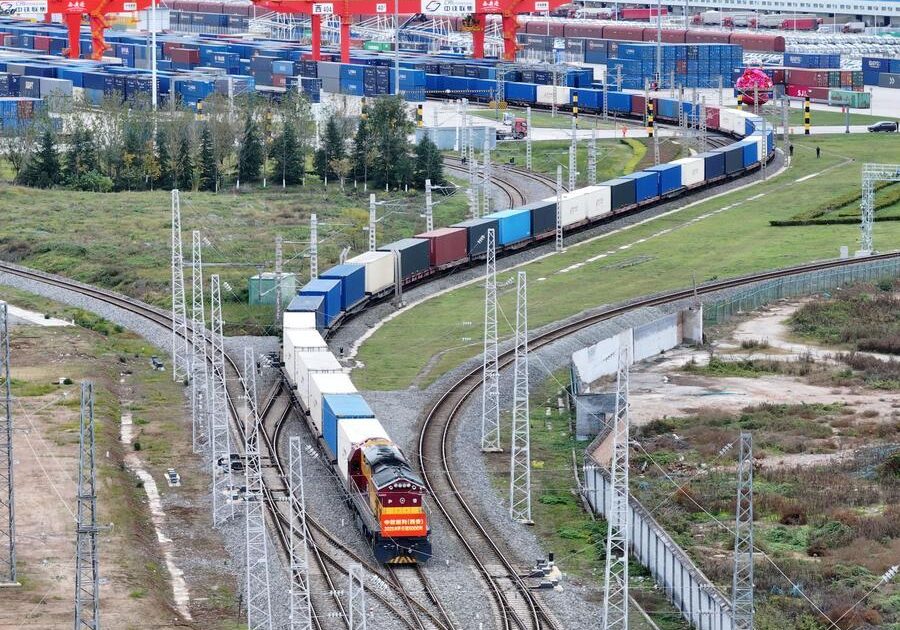
In 2025, freight traffic through the Altynkol-Khorgos railway border crossing between Kazakhstan and China exceeded 16.1 million tons, 9% higher than the target agreed upon within the Organization for Cooperation between Railways. This was reported by the press service of JSC NC Kazakhstan Temir Zholy, noting the early and confident fulfillment of planned parameters.

  • By sotter sotter
  • January 22, 2026

Road tolls for trucks in Europe will change in 2026.

Starting in 2026, road haulers in several European countries will face increased road tolls, an expanded toll network, and a transition to new toll collection models. These changes will affect Austria, Belgium, the Czech Republic, France, the Netherlands, Romania, and Poland, requiring transport companies to review tariffs, routes, and contract profitability. In many countries, COâ‚‚ emissions will be a key factor in toll calculations, reflecting the pan-European commitment to decarbonizing transport.

  • By sotter sotter
  • January 21, 2026

The January wave of returns is increasing the burden on logistics and warehouses.

Following the December peak in deliveries, the transport and logistics industry is entering a second, equally intense phase of the season – the period of mass returns. According to the Globkurier logistics platform, the volume of returned shipments in January is 25-30% higher than the monthly average. Moreover, over the past three years, the number of shipments classified as “return to sender” has increased by approximately 140%, indicating a stable structural trend associated with the growth of e-commerce.

  • By sotter sotter
  • January 21, 2026

The Port of Antwerp-Bruges and Infrabel are moving from a railway strategy to practical results.

The Port of Antwerp-Bruges, together with infrastructure operator Infrabel, is implementing a phased rail strategy aimed at developing sustainable port logistics. Electrification of the port’s rail network remains a key priority. In 2025, electrification of the line toward Oorderen was completed, and work on Line 11, leading to Combinant and BASF production facilities, is planned for 2026. This should increase capacity and reduce the carbon footprint of rail transport within the port.

  • By sotter sotter
  • January 21, 2026

Nova Marine Carriers has gained full control of the Waterland terminal in the Port of Amsterdam.

Nova Marine Carriers Group has completed a deal to acquire full control of VCK Port Logistics and the Waterland terminal in the Port of Amsterdam, as part of an agreement with partners Aug Bolten Wm Miller’s Nachfolger and Ership Grupo. According to Nova Marine Carriers, the deal allowed the consortium to consolidate management of a strategic asset, considered the only terminal in Europe capable of handling ships in a fully enclosed environment, 24 hours a day, regardless of weather conditions.

  • By sotter sotter
  • January 21, 2026

KTZ is extensively developing its railway infrastructure to enhance Kazakhstan’s transit potential.

JSC NC Kazakhstan Temir Zholy is implementing a comprehensive program to modernize and build new railway lines as part of the objectives set by the President of Kazakhstan to strengthen the country’s transit and logistics potential. Talgat Aldybergenov, Chairman of the Board of KTZ, emphasized that Kazakhstan’s advantageous geographic location in the center of Eurasia allows for the development of sustainable international transport corridors and the country’s transformation into a key logistics hub between East and West. The railway plays a key role in this regard, ensuring the growth of transit, export traffic, and integration into global supply chains.

  • By sotter sotter
  • January 20, 2026

In Kazakhstan, freight and passenger transportation increased by the end of 2025.

By the end of 2025, Kazakhstan’s transport sector demonstrated robust growth across all key areas, with the highest growth rates recorded in freight turnover. According to the Bureau of National Statistics, the total volume of freight transported by all modes increased by 7.9% to 1.164 billion tons, while total freight turnover increased by 13.6% to 584.3 billion ton-kilometers compared to 2024.